I’m Isaac Thomas. I received a grant from Theatre Ontario for a part of this summer to work as an intern in dramaturgy and artistic direction. I have been primarily reading scripts, and been peripherally involved in Sheep and the Whale which I will be stage managing in the fall.
In thinking about the Sheep and the Whale, my mind had been swirling around issues of race, class, immigration, and refugee status.
And then in my own small world it suddenly came to the fore. My mother, who lives in India, had been planning to visit us this summer. For one week. She has been missing her grandchild and regrets not being able to see him grow up. And I suppose she misses seeing me.
She called me with the Canadian visa requirements. Previous to this my mother has received the visa with merely a letter from a close friend stating that he will be financially responsible. She has been to Canada several times both personally and professionally. This time with the change in government or change in foreign policy the list was longer.
Along with that same letter of financial support, the Canadian High Commission required my tax returns from the previous two years; my companion’s tax returns; 6 months of our bank statements - checking account; letters from our employer stating that we were indeed employed; and the usual immigration and citizenship documentation. From my mother they required the same.
But what call for all this extra documentation? Why now? Is it the war on terror? Will this screening weed out terrorists? Is our Canadian foreign policy’s nose rammed so firmly up US foreign policy’s derrière that they cannot see anything but the Great Brown Threat? Is a 79 year old grandmother likely to pose a threat to national security? Or is it that in a 1 week visit she will decide to settle down here, bilk our decaying health system, and attempt to leach the system for every last dollar.
And what matters my bank account and tax return? It must be to check my class. Am I wealthy or at least comfortably middle class enough to support her if she falls ill? Or is my mother a worthy visitor only if I am in a particular tax bracket? Canada revenue already checks all financial transactions over $5000, so it can’t be a terror check. Would these same demands be made of a white nation? Of an Israeli visitor?
The funny part is that my mother will visit my brother and his family in Denmark. She will be staying there for a month after her Canadian visit. The Danish government gave her the visa upon merely receiving a letter from my brother stating that he will be financially responsible for her costs. That was all that was required. She had the Danish visa in her passport; but the Canadian High Commission wanted to confirm that my mother had no diabolical plan for the one week she would be here, so they sent her for this barrage of medical tests. By the time the second set of tests were done and the passport had been shuttled between Chennai and Delhi it was too close to her date of departure. So she rebooked her ticket to just a Copenhagen return, and has given up any hope of coming to Canada again.
The Dane’s have a far less open immigration policy. But getting a visa from them was not an issue. The Canadian’s on the other hand who pride themselves on their immigration policy haul us into this bureaucratic maze. The Liberals’ motto was “Give us your PhD’s, your Doctors, your Engineers, your IT specialists and we will make of them taxi drivers”. Is Reform’s, sorry the Regressive Conservative’s motto “Keep your brown skins out of our land unless they are gilded with Swiss Bank account numbers”?
If I wanted a group of immensely talented theatre artists – poor, brown and S.Asian - on a theatre exchange program would any of them get visas? What does this story say of Canadian immigration policy? What does it say about this nation and our obscenely underemployed immigrant population?
Wednesday, August 02, 2006


Thursday, July 27, 2006
Call for Submissions - Vancouver
Green Thumb Theatre is currently casting the role of "Stan" in the premier production of "Cranked" by Michael P. Northey. "Cranked" uses spoken word and hip hop to explore addiction and drug culture. This character must rap and freestyle throughout the entire play, therefore actors must show ability in this area of performance.
Cranked will tour throughout BC from October - December, with rehearsals beginning in September. Actors from all Provinces will be considered.
email: natalie.ackers@greenthumb.bc.ca
Phone: 604-254-4055
Equity members will be seen first at all open audition calls. Equity members cast in this production will be engaged under an Equity form of contract. CAEA members: please bring your membership card to the audition.
------------------------------------
* Source: Equity e-drive
Cranked will tour throughout BC from October - December, with rehearsals beginning in September. Actors from all Provinces will be considered.
email: natalie.ackers@greenthumb.bc.ca
Phone: 604-254-4055
Equity members will be seen first at all open audition calls. Equity members cast in this production will be engaged under an Equity form of contract. CAEA members: please bring your membership card to the audition.
------------------------------------
* Source: Equity e-drive
Auditions held to play Middle Eastern Villagers - G&M
Auditions held to play Middle Eastern Villagers
Canadian Press
EDMONTON — Dozens of people hoping to help Canadian soldiers prepare for duty in Afghanistan auditioned Saturday for the chance to play Middle Eastern villagers in realistic training scenarios.
The auditions were organized by DB Entertainment, a production company which has been hired by the military to produce realistic exercises for its soldiers at Canadian Forces Base Wainwright this fall.
The cast will live in mock villages and experience simulated suicide bombings and riots. It's all part of a plan to help Canadian soldiers understand Middle Eastern conflicts, culture and language, the production company said.
Many of those auditioning on Saturday were Muslims, and some with Afghan backgrounds.
Zahir Azizi, who was born in Afghanistan, said he is glad to have the chance to help educate soldiers and in turn, people in the Middle East.
"When these soldiers go to Afghanistan everything is strange to them, the topography, the culture and the traditions," Azizi said.
"In villages (in Afghanistan) the people are mostly uneducated and they can't understand why they (Canadian soldiers) are there. They just take what the Taliban or other parties or groups tell them about the soldiers."
Azizi is hoping to get a $250 per day speaking role.
People who can speak fluent Farsi, Pashtoun and Dari are being offered $100 more a day than people without the language skills.
Ninety people from Edmonton and Calgary will be cast for the training. A security screening is required to take part.
Casting organizers said that similar training has helped the United States and Great Britain reduce their incident, injury and death rates.
Kris Rurka, a casting agent, said the actors would not be cast in a stereotypical way.
"I think people are comfortable because they are helping so many people in their own countries," he said.
A military spokesperson was not available to comment.
Source: Globe and Mail
Canadian Press
EDMONTON — Dozens of people hoping to help Canadian soldiers prepare for duty in Afghanistan auditioned Saturday for the chance to play Middle Eastern villagers in realistic training scenarios.
The auditions were organized by DB Entertainment, a production company which has been hired by the military to produce realistic exercises for its soldiers at Canadian Forces Base Wainwright this fall.
The cast will live in mock villages and experience simulated suicide bombings and riots. It's all part of a plan to help Canadian soldiers understand Middle Eastern conflicts, culture and language, the production company said.
Many of those auditioning on Saturday were Muslims, and some with Afghan backgrounds.
Zahir Azizi, who was born in Afghanistan, said he is glad to have the chance to help educate soldiers and in turn, people in the Middle East.
"When these soldiers go to Afghanistan everything is strange to them, the topography, the culture and the traditions," Azizi said.
"In villages (in Afghanistan) the people are mostly uneducated and they can't understand why they (Canadian soldiers) are there. They just take what the Taliban or other parties or groups tell them about the soldiers."
Azizi is hoping to get a $250 per day speaking role.
People who can speak fluent Farsi, Pashtoun and Dari are being offered $100 more a day than people without the language skills.
Ninety people from Edmonton and Calgary will be cast for the training. A security screening is required to take part.
Casting organizers said that similar training has helped the United States and Great Britain reduce their incident, injury and death rates.
Kris Rurka, a casting agent, said the actors would not be cast in a stereotypical way.
"I think people are comfortable because they are helping so many people in their own countries," he said.
A military spokesperson was not available to comment.
Source: Globe and Mail
Friday, July 21, 2006
Modern Times at SummerWorks Theatre Festival
"I hold that the world is sick of armed rebellions." - Mahatma Gandhi
Modern Times Stage Company presents the English-language premiere of:
Interrogation
by Mohammad Rahmanian
A chair. A shaft of light. A voice.
Two youth are questioned after their participation in a violent ideological revolution. Their stories tell a timeless truth: nothing enduring can be built on violence.
translated and adapted by Soheil Parsa and Peter Farbridge
directed by Soheil Parsa
sound design by Thomas Ryder Payne
Featuring Leanna Brodie, Michelle Latimer, Ali Momen, Earl Pastko
Stage Manager Brenda Kamino
----------
Theatre Passe Muraille Mainspace - 16 Ryerson Ave (Queen & Bathurst, Toronto)
August 5 - 1:30 pm, August 7 - 7:30 pm, August 8 - 9:00 pm,
August 10 - 10:30 pm, August 11 - 4:30 pm, ugust 12 - 6:00 pm
No latecomers will be admitted once the show has started.
Tickets $10 at the door, $12 in advance (416-973-4000)
Part of the SummerWorks Theatre Festival
-----------
Modern Times Stage Company presents Interrogation, by internationally acclaimed Iranian playwright, Mohammad Rahmanian. This English premiere directed by Soheil Parsa promises to be one of the most timely and incisive performances of the Festival.
Two youth, Naeem (Ali Momen) and Safiya (Michelle Latimer) are being questioned after their participation in a violent revolution. Unable to stop their acts of violence once the war is won, they have continued to commit crimes, this time against those closest to them.
Interrogation is set in Algeria, 1962, yet the historical context is irrelevant. In Naeem and Safiya, we see the complexity of young people in countries around the world who have sacrificed youth and passion for ideology. Their stories tell a timeless truth: nothing enduring can be built on violence.
Translated and adapted by Soheil Parsa and Peter Fabridge, with a supporting cast of Earl Pastko and Leanna Brodie, and sound by Thomas Ryder Payne.
Modern Times is an artistic collaborative dedicated to creating culturally inclusive, alternative theatre experiences. Creators of the 2002 SummerWorks hit: Stories from the Rains of Love and Death.
Modern Times Stage Company presents the English-language premiere of:
Interrogation
by Mohammad Rahmanian
A chair. A shaft of light. A voice.
Two youth are questioned after their participation in a violent ideological revolution. Their stories tell a timeless truth: nothing enduring can be built on violence.
translated and adapted by Soheil Parsa and Peter Farbridge
directed by Soheil Parsa
sound design by Thomas Ryder Payne
Featuring Leanna Brodie, Michelle Latimer, Ali Momen, Earl Pastko
Stage Manager Brenda Kamino
----------
Theatre Passe Muraille Mainspace - 16 Ryerson Ave (Queen & Bathurst, Toronto)
August 5 - 1:30 pm, August 7 - 7:30 pm, August 8 - 9:00 pm,
August 10 - 10:30 pm, August 11 - 4:30 pm, ugust 12 - 6:00 pm
No latecomers will be admitted once the show has started.
Tickets $10 at the door, $12 in advance (416-973-4000)
Part of the SummerWorks Theatre Festival
-----------
Modern Times Stage Company presents Interrogation, by internationally acclaimed Iranian playwright, Mohammad Rahmanian. This English premiere directed by Soheil Parsa promises to be one of the most timely and incisive performances of the Festival.
Two youth, Naeem (Ali Momen) and Safiya (Michelle Latimer) are being questioned after their participation in a violent revolution. Unable to stop their acts of violence once the war is won, they have continued to commit crimes, this time against those closest to them.
Interrogation is set in Algeria, 1962, yet the historical context is irrelevant. In Naeem and Safiya, we see the complexity of young people in countries around the world who have sacrificed youth and passion for ideology. Their stories tell a timeless truth: nothing enduring can be built on violence.
Translated and adapted by Soheil Parsa and Peter Fabridge, with a supporting cast of Earl Pastko and Leanna Brodie, and sound by Thomas Ryder Payne.
Modern Times is an artistic collaborative dedicated to creating culturally inclusive, alternative theatre experiences. Creators of the 2002 SummerWorks hit: Stories from the Rains of Love and Death.
b current's ensemble members at Summerworks!
Collective Trinity presents
th[is] [this] t[His]
Written, Directed & Performed by Collective Trinity:
Rebecca Fisseha
Debbie Y. Nicholls
Christine Nicole Harris
Also featuring
Lucky Ejim
Stage Manager: Jennifer Trinier
Set/Costume Designer: Kara Springer
Producer: Joan M. Kivanda
Factory Studio Theatre
125 Bathurst St. (@ Adelaide)
Thurs. August 3, 10:30pm
Sat. August 5, 6:00pm
Sun. August 6, 9:00pm
Wed. August 9, 7:30pm
Sat. August 12, 3:00pm
Sun. August 13, 7:30pm
She and He have been friends for years but tonight is the official first date:
in a deluded attempt at seduction, She offers up parts of herself;
in a mockery of intimacy, She hides her medical condition;
in an abyss of confusion, She converses with God;
Perhaps steak, sex, and Miles Davis are all the analgesic She needs.
Rebecca Fisseha, Christine Nicole Harris and Debbie Y. Nicholls, all members of b current's the sun ensemble, have had their short multidisciplinary pieces “The Exhibition of Love, Ten Redefined and In This Place respectively" featured in past rock.paper.sistahz festivals and raw materials showcases. Upon the suggestion of another ensemble member, they decided to amalgamate all three scripts, which resulted in the birth of th[is] [this] t [His] and Collective Trinity. The story follows a woman's emotional journey through the transition of a platonic relationship, while she struggles with conflicting aspects of her personality and a divine voice.
This is made possible by the support of b current
th[is] [this] t[His]
Written, Directed & Performed by Collective Trinity:
Rebecca Fisseha
Debbie Y. Nicholls
Christine Nicole Harris
Also featuring
Lucky Ejim
Stage Manager: Jennifer Trinier
Set/Costume Designer: Kara Springer
Producer: Joan M. Kivanda
Factory Studio Theatre
125 Bathurst St. (@ Adelaide)
Thurs. August 3, 10:30pm
Sat. August 5, 6:00pm
Sun. August 6, 9:00pm
Wed. August 9, 7:30pm
Sat. August 12, 3:00pm
Sun. August 13, 7:30pm
She and He have been friends for years but tonight is the official first date:
in a deluded attempt at seduction, She offers up parts of herself;
in a mockery of intimacy, She hides her medical condition;
in an abyss of confusion, She converses with God;
Perhaps steak, sex, and Miles Davis are all the analgesic She needs.
Rebecca Fisseha, Christine Nicole Harris and Debbie Y. Nicholls, all members of b current's the sun ensemble, have had their short multidisciplinary pieces “The Exhibition of Love, Ten Redefined and In This Place respectively" featured in past rock.paper.sistahz festivals and raw materials showcases. Upon the suggestion of another ensemble member, they decided to amalgamate all three scripts, which resulted in the birth of th[is] [this] t [His] and Collective Trinity. The story follows a woman's emotional journey through the transition of a platonic relationship, while she struggles with conflicting aspects of her personality and a divine voice.
This is made possible by the support of b current
Wednesday, July 19, 2006
Poetry Reading at Harbourfront in English & Spanish
Short Story and Poetry Series
Studio Theatre Saturday, July 22, 1pm
Moderated by: Maria Angelica Enriquez
In English and Spanish
Readings by:
*Emma Beltran
*Claudio Andres Kuczer
*Rosario Gomez
*Pastor Valle Garay
For more information please visit:
www.harbourfrontcentre.com/wr/festivals/ryc.php
Studio Theatre Saturday, July 22, 1pm
Moderated by: Maria Angelica Enriquez
In English and Spanish
Readings by:
*Emma Beltran
*Claudio Andres Kuczer
*Rosario Gomez
*Pastor Valle Garay
For more information please visit:
www.harbourfrontcentre.com/wr/festivals/ryc.php
Friday, July 14, 2006
Production on Substance Abuse
Last Friday, CAST Canada held a full day training session for front-line workers in Burlington. CAST (Clean And Sober Thinking) is run by Tom Regehr, who focuses on delivering key messages to professionals in the addiction field. Tom also runs support groups for many addicts at any stage of recovery. For his training session in Burlington, Tom invited Draft Theatre to do a talk-back theatre piece to engage the participants to ask the questions they need to learn the answers to.
The morning consisted of an educational session on the stages of change by recently-turned 10year AA, Murray. Tom followed him with an activity to grasp the feeling of truly being disenfranchised.
The afternoon consisted of Draft Theatre's first production! We had the audience sit in a U-shape and had the four actors nearly complete the U with their chairs. After an introduction by the facilitator (me) explaining the process of the show, the actors sat and told their stories of the night before.
The audience then had a chance to ask questions of them, delving into their complex histories. The audience questioned the lifestyles, homes, jobs, drug use, triggers, beginnings of substance use, present situation, future plans... The audience was free to guide their conversation with the characters to explore the questions that they particularly needed to find the answers for. I think that it is this conversation and interaction that is beneficial for the audience, and where much of the learning takes place. Next time, I'm toying with the idea of making the script even shorter, with less information, so the audience needs to engage in that relationship still further.
The actors were Jessica Moss (currently acting in the Fringe Festival's Rejection Rate), Garth Sherriff, Alex --- and Danielle Szlawieniec-Haw.
To follow: More and more research on my part. I have interviews lined up with front-line workers and with addicts at all stages of recovery.
The next CAST Canada/Draft Theatre workshop will be in Guelph on August 18th. The format will combine the "talk-back" theatre piece with a live panel of addicts in maintenance.
The morning consisted of an educational session on the stages of change by recently-turned 10year AA, Murray. Tom followed him with an activity to grasp the feeling of truly being disenfranchised.
The afternoon consisted of Draft Theatre's first production! We had the audience sit in a U-shape and had the four actors nearly complete the U with their chairs. After an introduction by the facilitator (me) explaining the process of the show, the actors sat and told their stories of the night before.
The audience then had a chance to ask questions of them, delving into their complex histories. The audience questioned the lifestyles, homes, jobs, drug use, triggers, beginnings of substance use, present situation, future plans... The audience was free to guide their conversation with the characters to explore the questions that they particularly needed to find the answers for. I think that it is this conversation and interaction that is beneficial for the audience, and where much of the learning takes place. Next time, I'm toying with the idea of making the script even shorter, with less information, so the audience needs to engage in that relationship still further.
The actors were Jessica Moss (currently acting in the Fringe Festival's Rejection Rate), Garth Sherriff, Alex --- and Danielle Szlawieniec-Haw.
To follow: More and more research on my part. I have interviews lined up with front-line workers and with addicts at all stages of recovery.
The next CAST Canada/Draft Theatre workshop will be in Guelph on August 18th. The format will combine the "talk-back" theatre piece with a live panel of addicts in maintenance.
Mini Conference on Dramaturgy
Cahoots attended the Mini Conference on Dramaturgy this week! The conference was put on at the Theatre Centre in Toronto by Brian Quirt.
The speakers ......
Rosa Laborde discussed her Tarragon hit Leo, about three Chilean youths in the midst of a revolution.
Sarah Stanley described the creation process for her new work, Press.
Nina Lee Aquino talked about her work as artistic director of fu-GEN Asian-Canadian Theatre Company. In particular she discussed dramaturg-ing Leon Aureus' process of adapting Terry Woo's Banana Boys from novel to play.
Linda Griffiths outlined her extraordinary improvisational writing process - much less "tap tap tap" on the keyboard, and much more live creation in front of an audience. She performed a section of Baby Finger.
Alisa Palmer discussed her role as assistant director for Lord of the Rings. A unique process!! This stemmed much conversation on what happens when there is no dramaturg.Trey Anthony discussed the international success of her play Da Kink in My Hair. She took us through the differences of producing it for Fringe, for Passe-Muraille, and for Mirvish.
Trey also read us an excerpt from her new play: I am Not A Dinner Mint about "The crap women swallow to stay in a relationship!" It runs beginning July 21 at theHarbourfront Centre Theatre. Visit http://www.iamnotadinnermint.com/ for more information, or call the Box Office at 416.973.4000.
In fact, the great thing about the way that Brian put this event together, was the emphasis on making sure everybody had a chance to get to know each other. The morning of the first day of the conference was spent with public introductions so that we could all gain a sense of everybody else's particular theatre interests as well as their current work and projects. This stemmed lots of great conversations over the breaks! It was wonderful to have been given significant time during these breaks to really have good conversations with the speakers as well as the others attending the conference!
Tuesday, July 11, 2006
Dusk Dances 2006
Dusk Dances 2006
July 11 - 16
(south of Bloor on Dufferin)
Featuring new works from Nova Bhattacharya and Louis Laberge, Lucy Rupert and William Lau; and from
Opening Band: Quilombo do Quiemado Grupo de Capoiera
Post-show artist talk-back: July 12
Moving Pictures Festival outdoor screening: July 13, 14 and 15 after the show
Hosted by Lisa Anne Ross
Band starts at 7pm, Dance starts at 7:30pm
Info: 416 504 6429 ex 41
Pay-What-You-Can
Click Here for more information on Dusk Dances 2006 tour!
"An event to celebrate.”
“These wildly popular, family oriented concerts are one of the premiere dance events of a
Sunday, July 09, 2006
Perpetuating the Yellow Peril
Perpetuating the Yellow Peril
By Lakshmi Chaudhry
At first glance, Jeff Adachi's Slanted Screen is an earnest documentary that covers familiar ground. The shameful depiction of minorities—in this case, Asian-American men—in television and film is hardly news. What makes the movie special, however, is that it offers a rare view of Hollywood from the inside. Apart from the occasional talking head, the interviewees are actors, producers, directors and screenwriters.
Part of the movie's interest lies in their horror stories, which are likely to make even the most jaded viewer cringe. Producer Terence Chang—whose big-budget credits include Mission Impossible II, Face-Off and Broken Arrow—describes being told to change the race of the white villain in the script for the Chow Yun Fat vehicle, The Replacement Killers, and make him a Chinese druglord instead. The logic: "If the hero is Asian then the bad guys have to be Asian as well." The racism is open and unapologetic.
As gruesome as such anecdotes may be, Slanted Screen is most compelling when its subjects explore the conflict between who they are and what they do. It may be hard to watch a repulsive Long Duk Dong slobbering over the girl in Sixteen Candles, but it's harder still to be the guy who plays him: Gedde Watanabe, a Japanese-American actor born and raised in Utah, who put on a fake accent to utter immortal lines, such as "No more yankie my wankie. The Donger need food."
In the seven-minute short film The Screen Test—which was screened along with Slanted Screen in San Francisco—actress Judy Lee sums up every Asian actor's moral dilemma: "Our paychecks come from stereotypes." When there are practically no roles for Asians, a script
that calls for an "opium den mistress" is a cause for celebration.
The art of survival lies in enduring what you must, and quietly changing what you can within Hollywood's stifling parameters. What may look like just another stereotype from the outside may in fact be a serious attempt to challenge industry norms. A good example is what has become Hollywood's favorite Asian character: the martial arts warrior. Bruce Lee may seem to be just another uni-dimensional macho hero, but his rise marked an epochal shift for Asian Americans, both as actors and as men. After decades of being demonized as sly yet effeminate "yellow peril" in the post-World War II era, Lee represented a positive, vigorous version of masculinity. And it's this consolation that actors like Cary-Hiroyuki Tagawa cling to when they play similar roles in movies like Mortal Kombat, even when they're negative. "If the choice is between playing wimpy business men and the bad guy," Tagawa tells Adachi, "I'd rather play the bad guy. … I want kids to know that Asian men have balls."
When Hollywood allows Asian leading men to be macho, it rarely gives them the privilege of being "American." "Asian Americans tend to be looked at as perpetual aliens," says author and poet David Mura. "In other words, an Asian-American male can't be seen as representative of
all Americans in the way Tom Cruise or Tom Hanks or even Denzel Washington can."
According to University of Delaware English professor Peter X. Feng, the benefit of safely foreign heroes such as Jet Li or Chow Yun Fat is that "they come to these shores to solve a problem and then they leave. So there is never any question of integrating them into the
American body politic." In this sense, Mura argues, Asian-American men are worse off than women, who "are more easily assimilated by the white psyche in part because they are seen as sexually available to white men." Hence Lucy Liu can be one of Charlie's Angels, but no one
would cast, say, Jason Scott Lee in a remake of Starsky and Hutch—though Hollywood execs were only too happy to cast him as an Indian in The Jungle Book.
While there have been exceptions to this depressing norm—Dustin Nguyen as Officer Harry Ioki in "21 Jump Street" or more recently, Harold and Kumar Go to White Castle—the predicament facing Asian male actors today is grim compared to Hollywood's silent era, when Sessue Hayakawa rivaled Douglas Fairbanks, Charlie Chaplin and John Barrymore in
popularity as a leading man. But despite his Rudolf Valentino-esque persona, even Hayakawa almost never got the girl—not unless she was played by his own Japanese wife, Aoki. His present-day counterparts are no better off. Chow Yun Fat never gets to kiss Mira Sorvino in
Replacement Killers, while the creators of Romeo Must Die edited out the sole kiss between Aaliyah and Jet Li. "To say it doesn't affect us is bullshit," declares Tagawa, the anguish bubbling to the surface as he exclaims, "We're not eunuchs!"
The stark contrast between the sexual images of Asian men and women on-screen follows the dictates of age-old colonialist logic, where the sexual appropriation of women is accompanied by the emasculation of the men. That the documentary never includes a discussion of women, or
their perspective, is a glaring omission. The very action hero roles that seem to affirm Asian masculinity can be deeply problematic from a feminist perspective. Is a Schwarzenegger-like machismo really the kind of Asian male identity that we want to promote?
The sexual politics are even more complicated. Take, for example, the comments of Gene Cajayon, who directed one of the first Filipino-American movies, The Debut (2000). Cajayon says it was important for him to make his lead character "someone who is attractive to white girls" so as to establish his credentials as a bona fide "cool kid." But how subversive is this character if his masculinity requires a white seal of sexual approval and treats white women as mere markers of his prowess?
A more compassionate interpretation of this desire is to see it instead as a hunger to be seen as sexual, period. That it entails white affirmation is merely a sad acknowledgement of the requirements of the broader culture we live in. "It seems to me unfair to question the desire of Asian-American men to feel sexually attractive," says Mura. "If an African-American man were to say, for instance, that he wanted to be appreciated for his intelligence and not just stereotyped for sexual or athletic prowess, would we say he was succumbing to a trap which defined real male worth by intelligence?"
Mura argues that Asian men "desire a complete picture of ourselves and to be valued as complete individuals. We desire respect in those areas where we feel we are disrespected. We don't get to pick and choose where those areas are." But we are more likely to see a more "complete" picture of Asian men if we portray them as they are rather than as ethnic versions of Hollywood gender-laden fantasies of manhood that haven't served white men well. In fact, those kind of movies will be just as valuable for the rest of us, male or female, Asian or otherwise.
Lakshmi Chaudhry has been a reporter and an editor for independent publications for more than six years, and is a senior editor at In These Times, where she covers the cross-section of culture and politics.
This article available at:
http://www.inthesetimes.com/site/main/article/2705/
By Lakshmi Chaudhry
At first glance, Jeff Adachi's Slanted Screen is an earnest documentary that covers familiar ground. The shameful depiction of minorities—in this case, Asian-American men—in television and film is hardly news. What makes the movie special, however, is that it offers a rare view of Hollywood from the inside. Apart from the occasional talking head, the interviewees are actors, producers, directors and screenwriters.
Part of the movie's interest lies in their horror stories, which are likely to make even the most jaded viewer cringe. Producer Terence Chang—whose big-budget credits include Mission Impossible II, Face-Off and Broken Arrow—describes being told to change the race of the white villain in the script for the Chow Yun Fat vehicle, The Replacement Killers, and make him a Chinese druglord instead. The logic: "If the hero is Asian then the bad guys have to be Asian as well." The racism is open and unapologetic.
As gruesome as such anecdotes may be, Slanted Screen is most compelling when its subjects explore the conflict between who they are and what they do. It may be hard to watch a repulsive Long Duk Dong slobbering over the girl in Sixteen Candles, but it's harder still to be the guy who plays him: Gedde Watanabe, a Japanese-American actor born and raised in Utah, who put on a fake accent to utter immortal lines, such as "No more yankie my wankie. The Donger need food."
In the seven-minute short film The Screen Test—which was screened along with Slanted Screen in San Francisco—actress Judy Lee sums up every Asian actor's moral dilemma: "Our paychecks come from stereotypes.
that calls for an "opium den mistress" is a cause for celebration.
The art of survival lies in enduring what you must, and quietly changing what you can within Hollywood's stifling parameters. What may look like just another stereotype from the outside may in fact be a serious attempt to challenge industry norms. A good example is what has become Hollywood's favorite Asian character: the martial arts warrior. Bruce Lee may seem to be just another uni-dimensional macho hero, but his rise marked an epochal shift for Asian Americans, both as actors and as men. After decades of being demonized as sly yet effeminate "yellow peril" in the post-World War II era, Lee represented a positive, vigorous version of masculinity. And it's this consolation that actors like Cary-Hiroyuki Tagawa cling to when they play similar roles in movies like Mortal Kombat, even when they're negative. "If the choice is between playing wimpy business men and the bad guy," Tagawa tells Adachi, "I'd rather play the bad guy. … I want kids to know that Asian men have balls."
When Hollywood allows Asian leading men to be macho, it rarely gives them the privilege of being "American." "Asian Americans tend to be looked at as perpetual aliens," says author and poet David Mura. "In other words, an Asian-American male can't be seen as representative of
all Americans in the way Tom Cruise or Tom Hanks or even Denzel Washington can."
According to University of Delaware English professor Peter X. Feng, the benefit of safely foreign heroes such as Jet Li or Chow Yun Fat is that "they come to these shores to solve a problem and then they leave. So there is never any question of integrating them into the
American body politic." In this sense, Mura argues, Asian-American men are worse off than women, who "are more easily assimilated by the white psyche in part because they are seen as sexually available to white men." Hence Lucy Liu can be one of Charlie's Angels, but no one
would cast, say, Jason Scott Lee in a remake of Starsky and Hutch—though Hollywood execs were only too happy to cast him as an Indian in The Jungle Book.
While there have been exceptions to this depressing norm—Dustin Nguyen as Officer Harry Ioki in "21 Jump Street" or more recently, Harold and Kumar Go to White Castle—the predicament facing Asian male actors today is grim compared to Hollywood's silent era, when Sessue Hayakawa rivaled Douglas Fairbanks, Charlie Chaplin and John Barrymore in
popularity as a leading man. But despite his Rudolf Valentino-esque persona, even Hayakawa almost never got the girl—not unless she was played by his own Japanese wife, Aoki. His present-day counterparts are no better off. Chow Yun Fat never gets to kiss Mira Sorvino in
Replacement Killers, while the creators of Romeo Must Die edited out the sole kiss between Aaliyah and Jet Li. "To say it doesn't affect us is bullshit," declares Tagawa, the anguish bubbling to the surface as he exclaims, "We're not eunuchs!"
The stark contrast between the sexual images of Asian men and women on-screen follows the dictates of age-old colonialist logic, where the sexual appropriation of women is accompanied by the emasculation of the men. That the documentary never includes a discussion of women, or
their perspective, is a glaring omission. The very action hero roles that seem to affirm Asian masculinity can be deeply problematic from a feminist perspective. Is a Schwarzenegger-
The sexual politics are even more complicated. Take, for example, the comments of Gene Cajayon, who directed one of the first Filipino-American movies, The Debut (2000). Cajayon says it was important for him to make his lead character "someone who is attractive to white girls" so as to establish his credentials as a bona fide "cool kid." But how subversive is this character if his masculinity requires a white seal of sexual approval and treats white women as mere markers of his prowess?
A more compassionate interpretation of this desire is to see it instead as a hunger to be seen as sexual, period. That it entails white affirmation is merely a sad acknowledgement of the requirements of the broader culture we live in. "It seems to me unfair to question the desire of Asian-American men to feel sexually attractive," says Mura. "If an African-American man were to say, for instance, that he wanted to be appreciated for his intelligence and not just stereotyped for sexual or athletic prowess, would we say he was succumbing to a trap which defined real male worth by intelligence?
Mura argues that Asian men "desire a complete picture of ourselves and to be valued as complete individuals. We desire respect in those areas where we feel we are disrespected. We don't get to pick and choose where those areas are." But we are more likely to see a more "complete" picture of Asian men if we portray them as they are rather than as ethnic versions of Hollywood gender-laden fantasies of manhood that haven't served white men well. In fact, those kind of movies will be just as valuable for the rest of us, male or female, Asian or otherwise.
This article available at:
http://www.intheset
Saturday, July 08, 2006
Obsidian Theatre Company Apprenticeships
CALL FOR SUBMISSIONS - TORONTO
------------------------------
Obsidian Theatre Company
Apprenticeship Positions Available
Obsidian Theatre is a company of seasoned theatre professionals who come
from the many diverse cultures that make up the African Diasporic
experience in Canada. We are passionately dedicated to the exploration,
development and production of the Black voice on the world stage.
Funded by the Department of Canadian Heritage, Obsidian Theatre Company
is offering 4 paid apprenticeship positions as part of the 2006/07
season, to work alongside the company of Lorraine Kimsa Theatre for
Young Audiences' production of The Seussical, directed by Allen MacInnis
and Obsidian Theatre's world premiere production of Austin Clarke's The
Polished Hoe directed by Colin Taylor at the Harbourfront Centre
Theatre.
Apprenticeships will range from 6-8 weeks in the fall of 2006 and 6-8
weeks in the winter of 2007, the precise dates depending on the
position.
There will be 4 apprentices chosen from the following 6 positions,
depending on the interests and abilities of the applicants:
Apprentice Director
Apprentice Set Designer
Apprentice Costume Designer
Apprentice Lighting Designer
Apprentice Production Manager
Apprentice Dramaturg (this position will also include working with
Nightswimming, CanStage and others)
Requirements:
You are a Canadian citizen or landed immigrant
You are, or identify yourself as, a member of the African Diaspora
You are a committed individual who is actively pursuing a professional
career in the theatre
You have some degree of experience at the community level, in an
educational
institution or in a professional organization
Applicants must submit a bio/resume and letter of intent indicating
career goals and how an apprentice position would help in achieving
those goals. Interviews will be conducted during the last week of July.
Submit Applications to:
Naomi Campbell
Apprenticeship Coordinator, Obsidian Theatre
943 Queen Street East
Toronto ON M4M 1J6
For more information call Naomi Campbell at 416 703 5491 or Philip Akin
at
416 463 8444 or email naomic@interlog.com.
Application Deadline: July 20, 2006
------------------------------------
Thursday, June 22, 2006
Call for submissions - MayaTheatre
MayaTheatre presents the 5th Annual South Asian Theatre Festival, as part of ‘Rogers Masala Mehndi Masti’ at the Canadian National Exhibition Place, July 28th–30th, 2006. MayaTheatre is currently accepting submissions and proposals towards performances in the following showcase categories:
Outdoor and Gorilla Theatre – This presents an opportunity for artists to present their works, drawing in crowds from passerbyers. Gorilla Theatre means several things, all due to the pioneering influence of Christopher Carter Sanderson. It’s free. It’s outside. It’s high energy. The variety is enormous, everything from classics by Shakespeare, Tagore, and Moliere to post modern theatre work by Badal Sircar, Girish Karnad and Utpal Dutt. What’s consistent is the aesthetic, an opportunity to bring actors and audiences together in nature and under the stars, the way the Greeks or Ancient Indian Civilizations conceived of drama in the first place, where we share the passion and joy and spectacular heightened emotion that reminds us why theatre is so vital and necessary.
New Playwrights – We have created a category for emerging playwrights of all genres to present from their unpublished works, as a staged reading. This allows you to share your work with a diverse audience while it also offers a venue to meet and collaborate with both, established and emerging artists. A selected excerpt from the plays will be presented, however, with permission from playwrights we will have the full scripts available for those who wish to read or learn more about them at the festival.
Spoken Word – We are looking for innovative works from poets, performance artists, and those who wish to explore the fundamentals of communication with poetic zest. This is a platform of expression and a channel of communication between artists of the South Asian Diaspora and their communities. This year, in a special presentation of this always exciting and inspiring showcase we are looking for 60 artists to come and speak for just one minute each. Titled ‘Censure Clock’ this would showcase 60 voices from 60 artists in a one hour show.
Community Theatre – We encourage theatre groups to present short pieces or excerpts from plays for a staged production. The presentation can be of any language spoken within the South Asian Diaspora. Performers of various backgrounds will encourage viewers to expand their vision and recognize a vast cultural diversity within our Community.
Youth Workshop – This will be three week acting intensive (mon-fri) at the Equity Showcase Theatre that runs from July 10th-28th, 10am-5pm for young actors, 11-18yrs. The participants will explore movement, voice, improvisation, and scene study work. The focus will be on creating a fluid performance piece dealing with current events facing South Asian youth, to be presented at the Equity Showcase Theatre on July 27th and at the Theatre Festival on the 29th and 30th.
Story Telling and Clowning – As part of MayaTheatre’s Children’s Programming, we are looking for performers to submit creative ideas for pantomime, improvisation, and story telling geared towards children. We are open to ideas on various books, plays, stories, and mythologies. Please note all submissions are open to artists who wish to explore both issues dealing with the South Asian Diaspora as well as non-culture based works.
Submissions Deadline – June 31st
Please send all Submission Material to:
mayatheatre@hotmail.com and oporajito@hotmail.com Or:
South Asian Theatre Festival
c/o Oporajito Bhattacharjee
387 Sherbourne Street, Suite 111
Toronto, Ontario
M4X 1K4
Outdoor and Gorilla Theatre – This presents an opportunity for artists to present their works, drawing in crowds from passerbyers. Gorilla Theatre means several things, all due to the pioneering influence of Christopher Carter Sanderson. It’s free. It’s outside. It’s high energy. The variety is enormous, everything from classics by Shakespeare, Tagore, and Moliere to post modern theatre work by Badal Sircar, Girish Karnad and Utpal Dutt. What’s consistent is the aesthetic, an opportunity to bring actors and audiences together in nature and under the stars, the way the Greeks or Ancient Indian Civilizations conceived of drama in the first place, where we share the passion and joy and spectacular heightened emotion that reminds us why theatre is so vital and necessary.
New Playwrights – We have created a category for emerging playwrights of all genres to present from their unpublished works, as a staged reading. This allows you to share your work with a diverse audience while it also offers a venue to meet and collaborate with both, established and emerging artists. A selected excerpt from the plays will be presented, however, with permission from playwrights we will have the full scripts available for those who wish to read or learn more about them at the festival.
Spoken Word – We are looking for innovative works from poets, performance artists, and those who wish to explore the fundamentals of communication with poetic zest. This is a platform of expression and a channel of communication between artists of the South Asian Diaspora and their communities. This year, in a special presentation of this always exciting and inspiring showcase we are looking for 60 artists to come and speak for just one minute each. Titled ‘Censure Clock’ this would showcase 60 voices from 60 artists in a one hour show.
Community Theatre – We encourage theatre groups to present short pieces or excerpts from plays for a staged production. The presentation can be of any language spoken within the South Asian Diaspora. Performers of various backgrounds will encourage viewers to expand their vision and recognize a vast cultural diversity within our Community.
Youth Workshop – This will be three week acting intensive (mon-fri) at the Equity Showcase Theatre that runs from July 10th-28th, 10am-5pm for young actors, 11-18yrs. The participants will explore movement, voice, improvisation, and scene study work. The focus will be on creating a fluid performance piece dealing with current events facing South Asian youth, to be presented at the Equity Showcase Theatre on July 27th and at the Theatre Festival on the 29th and 30th.
Story Telling and Clowning – As part of MayaTheatre’s Children’s Programming, we are looking for performers to submit creative ideas for pantomime, improvisation, and story telling geared towards children. We are open to ideas on various books, plays, stories, and mythologies. Please note all submissions are open to artists who wish to explore both issues dealing with the South Asian Diaspora as well as non-culture based works.
Submissions Deadline – June 31st
Please send all Submission Material to:
mayatheatre@hotmail.com and oporajito@hotmail.com Or:
South Asian Theatre Festival
c/o Oporajito Bhattacharjee
387 Sherbourne Street, Suite 111
Toronto, Ontario
M4X 1K4
Sunday, June 18, 2006
Do not go gentile, into that good flight
On my way to the Next Big Bang conference in Los Angeles this morning, I took my maiden flight on El Al Airlines, the flagship carrier of Israel.
I had been warned by my good friend Ballu to expect much tighter security from El Al than your average airline. “When they say to show up two hours before your flight,” he said, “they mean show up two hours before."
Armed with this information, I arrived at Pearson at 5:50 for my 8:00 am flight. And sure enough, the security was intense. Before I arrived at the ticket counter, I was pre-screened by an agent who asked where I stayed last night, where my bags were last night, whether I had left my bags unattended—all the usual questions but with a higher degree of scrutiny and specificity.
I was also informed that I would have to surrender my carry-on luggage and that it would be returned to me at the boarding gate just before flight time. After I received my boarding pass, I was asked to follow another agent to a private area in the arrivals level. There, my shoes were x-rayed. After grabbing some breakfast, I went through the regular security gate where I removed my shoes a second time for x-rays.
Then, at the boarding gate, El Al had set up a second security area complete with metal detector and x-rays. I removed my shoes a third time for inspection.
I’m actually not complaining about the security measures—they’re perfectly understandable given the circumstances. If anything, I felt very secure boarding that plane. On other airlines, I sometimes feel like I can find the loopholes, the little ways to get around the system. I wonder why the procedures are half-assed enough to be annoying but not really secure. Not El Al. You’d have to be a planning genius to get something on board one of their planes.
 Further, all the El Al representatives were perfectly polite and they applied the security measures even-handedly with one litle exception: I saw a 90-year old Hasid get a free pass by the second security gate. I admit part of me was thinking, “Are you kidding me? You could hide a small militia in that beard of his.” I wisely kept this thought to myself as I did not relish the thought of a full cavity search.
The flight itself was very comfortable. I was served a meal that was both delicious and approved by Rabbi Levin of the Kashruth Council of Canada. There was one thing I found somewhat peculiar. After all that stringent security, I was given a metal knife with my meal.
My theory is that the knife is a dare to would-be hijackers. I wouldn’t be surprised if all the flight attendants were krav maga experts. That 100-pound stewardess? Her body language is screaming, “You even think about storming the cockpit with your cutlery and I will snap you in two like an afikomen.”
I hope there’s gefilte fish on my return flight as well.
I had been warned by my good friend Ballu to expect much tighter security from El Al than your average airline. “When they say to show up two hours before your flight,” he said, “they mean show up two hours before."
Armed with this information, I arrived at Pearson at 5:50 for my 8:00 am flight. And sure enough, the security was intense. Before I arrived at the ticket counter, I was pre-screened by an agent who asked where I stayed last night, where my bags were last night, whether I had left my bags unattended—all the usual questions but with a higher degree of scrutiny and specificity.
I was also informed that I would have to surrender my carry-on luggage and that it would be returned to me at the boarding gate just before flight time. After I received my boarding pass, I was asked to follow another agent to a private area in the arrivals level. There, my shoes were x-rayed. After grabbing some breakfast, I went through the regular security gate where I removed my shoes a second time for x-rays.
Then, at the boarding gate, El Al had set up a second security area complete with metal detector and x-rays. I removed my shoes a third time for inspection.
I’m actually not complaining about the security measures—they’re perfectly understandable given the circumstances. If anything, I felt very secure boarding that plane. On other airlines, I sometimes feel like I can find the loopholes, the little ways to get around the system. I wonder why the procedures are half-assed enough to be annoying but not really secure. Not El Al. You’d have to be a planning genius to get something on board one of their planes.
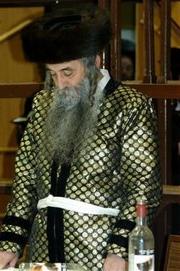 Further, all the El Al representatives were perfectly polite and they applied the security measures even-handedly with one litle exception: I saw a 90-year old Hasid get a free pass by the second security gate. I admit part of me was thinking, “Are you kidding me? You could hide a small militia in that beard of his.” I wisely kept this thought to myself as I did not relish the thought of a full cavity search.
The flight itself was very comfortable. I was served a meal that was both delicious and approved by Rabbi Levin of the Kashruth Council of Canada. There was one thing I found somewhat peculiar. After all that stringent security, I was given a metal knife with my meal.
My theory is that the knife is a dare to would-be hijackers. I wouldn’t be surprised if all the flight attendants were krav maga experts. That 100-pound stewardess? Her body language is screaming, “You even think about storming the cockpit with your cutlery and I will snap you in two like an afikomen.”
I hope there’s gefilte fish on my return flight as well.
Friday, June 16, 2006
Stratford finally changes its tune
This is an article from Kamal Al-Solaylee from the June 16 edition of The Globe and Mail:
 Djanet Sears has a problem with being first. As previews begin next week for a revival of her 1997 Governor-General's Award-winning play Harlem Duet, she officially becomes the first black playwright and the first black female director in the 54-year history of the Stratford Festival of Canada. The production will also be the first on any of its stages with an all-black cast.
When her follow-up play The Adventures of a Black Girl in Search of God was picked up by Mirvish Productions in 2003 for an extended run at Harbourfront Centre Theatre, Sears became the first black Canadian playwright to be featured on the playbill of this country's largest commercial producer.
Impressive, even if shockingly belated, achievements all, but the jury inside Sears's head is still out on what they mean in the long term. "Firsts are only great as the beginning of something," she explains in an interview in Toronto earlier this week. "If it's not, it's the only one." The racial-representation ratio in Canada's larger theatres is far from perfect, but there are some positive signs.
In 2005 Mirvish Productions followed up Adventures with a production of Trey Anthony's black-women confessional 'da Kink in My Hair, to date the most commercially successful single production of a Canadian play in the history of Toronto. At Stratford, there's a feeling that the end of Richard Monette's reign and changes in the festival's artistic directorship structure will bring about more culturally diverse programming.
"Things are changing, people are looking around and saying 'The world doesn't look like us here,' " Sears acknowledges.
The world of Harlem Duet certainly doesn't look like anything Stratford has created before even if one of its key players should feel at home in a festival with classical and Shakespeare credentials. The play is a modern reworking of Othello from an all-black perspective. Set over three time periods -- the 1860s, 1928 and the present -- Harlem Duet traces three relationships between Othello (Nigel Shawn Williams) and his black lover Billie (Karen Robinson), all of which end when he leaves her for an offstage white woman.
The play dwells the longest on the present in which Othello and Billie have already broken up but continue a sexual relationship that's both romantic and politically bifurcated. There are many debates in Harlem Duet but the central one examines integration versus separatism among the black community. Whether they embrace the colour of their skin (as Billie does) or refuse to be seen as just that (as Othello insists), "the burden of race" weighs as heavily on the characters in the play as it has for more than two decades of playwriting on their creator. I ask Sears if she's ever tired of carrying such a burden on behalf of a community as diverse as Canada's black population.
 "You're going to carry it anyway," she says. "When you hear that there have been three shootings, you go, 'Oh my god, I hope they are not black.' You identify with your race even when you don't know who these people are. You know it's going to have an effect on you, whether you like it or not. If you are going to have the burden, you might as well do something with it."
Rereading the original text of Harlem Duet was like downloading a soundtrack of the nineties' racial debates, from the phenomenon of The Bell Curve (a book that relates intelligence to race) to the O. J. Simpson trial. The latter case is particularly worth reprising. It may have been eclipsed by more devastating incidents (Katrina, for instance), but when the play opened in Toronto in 1997, the "Othello Syndrome" was still fresh.
"Jealous black men who are going to kill the white girl," Sears explains it in more straightforward terms. Yet, Harlem Duet doesn't attempt any kind of apology on behalf of Othello or Billie.
"The error that people often make is to think it's one-sided," says Sears. "I'm Billie and I'm Othello. That's the conflict. This is the effect of 400 years of white supremacy [and] what that has done to the psyche of black people."
Even if Sears has updated some of the references in the play to include Condoleezza Rice and Oprah Winfrey as the new faces of black America, Harlem Duet holds up, Sears suggests, because it asks questions and avoids answers.
"I find the questions still alive and real," says Sears. What's more disturbing perhaps is that these questions have passed on to another group in North America, its Arab and Muslim population, who collectively find themselves the latest addition to a long list of dangerous and suspicious racial others.
But any new meanings to Harlem Duet don't tone down or nullify its essential blackness. Harlem is more than a location backdrop for a postmodern twist on Othello.
"There's something about Harlem," Sears says. "I can't liken it to anything in the mainstream world. The place of Harlem Renaissance, the place of extraordinary poverty, of riots. . . . It feels like an axis, a central point, a hot spot."
 Djanet Sears has a problem with being first. As previews begin next week for a revival of her 1997 Governor-General's Award-winning play Harlem Duet, she officially becomes the first black playwright and the first black female director in the 54-year history of the Stratford Festival of Canada. The production will also be the first on any of its stages with an all-black cast.
When her follow-up play The Adventures of a Black Girl in Search of God was picked up by Mirvish Productions in 2003 for an extended run at Harbourfront Centre Theatre, Sears became the first black Canadian playwright to be featured on the playbill of this country's largest commercial producer.
Impressive, even if shockingly belated, achievements all, but the jury inside Sears's head is still out on what they mean in the long term. "Firsts are only great as the beginning of something," she explains in an interview in Toronto earlier this week. "If it's not, it's the only one." The racial-representation ratio in Canada's larger theatres is far from perfect, but there are some positive signs.
In 2005 Mirvish Productions followed up Adventures with a production of Trey Anthony's black-women confessional 'da Kink in My Hair, to date the most commercially successful single production of a Canadian play in the history of Toronto. At Stratford, there's a feeling that the end of Richard Monette's reign and changes in the festival's artistic directorship structure will bring about more culturally diverse programming.
"Things are changing, people are looking around and saying 'The world doesn't look like us here,' " Sears acknowledges.
The world of Harlem Duet certainly doesn't look like anything Stratford has created before even if one of its key players should feel at home in a festival with classical and Shakespeare credentials. The play is a modern reworking of Othello from an all-black perspective. Set over three time periods -- the 1860s, 1928 and the present -- Harlem Duet traces three relationships between Othello (Nigel Shawn Williams) and his black lover Billie (Karen Robinson), all of which end when he leaves her for an offstage white woman.
The play dwells the longest on the present in which Othello and Billie have already broken up but continue a sexual relationship that's both romantic and politically bifurcated. There are many debates in Harlem Duet but the central one examines integration versus separatism among the black community. Whether they embrace the colour of their skin (as Billie does) or refuse to be seen as just that (as Othello insists), "the burden of race" weighs as heavily on the characters in the play as it has for more than two decades of playwriting on their creator. I ask Sears if she's ever tired of carrying such a burden on behalf of a community as diverse as Canada's black population.
 "You're going to carry it anyway," she says. "When you hear that there have been three shootings, you go, 'Oh my god, I hope they are not black.' You identify with your race even when you don't know who these people are. You know it's going to have an effect on you, whether you like it or not. If you are going to have the burden, you might as well do something with it."
Rereading the original text of Harlem Duet was like downloading a soundtrack of the nineties' racial debates, from the phenomenon of The Bell Curve (a book that relates intelligence to race) to the O. J. Simpson trial. The latter case is particularly worth reprising. It may have been eclipsed by more devastating incidents (Katrina, for instance), but when the play opened in Toronto in 1997, the "Othello Syndrome" was still fresh.
"Jealous black men who are going to kill the white girl," Sears explains it in more straightforward terms. Yet, Harlem Duet doesn't attempt any kind of apology on behalf of Othello or Billie.
"The error that people often make is to think it's one-sided," says Sears. "I'm Billie and I'm Othello. That's the conflict. This is the effect of 400 years of white supremacy [and] what that has done to the psyche of black people."
Even if Sears has updated some of the references in the play to include Condoleezza Rice and Oprah Winfrey as the new faces of black America, Harlem Duet holds up, Sears suggests, because it asks questions and avoids answers.
"I find the questions still alive and real," says Sears. What's more disturbing perhaps is that these questions have passed on to another group in North America, its Arab and Muslim population, who collectively find themselves the latest addition to a long list of dangerous and suspicious racial others.
But any new meanings to Harlem Duet don't tone down or nullify its essential blackness. Harlem is more than a location backdrop for a postmodern twist on Othello.
"There's something about Harlem," Sears says. "I can't liken it to anything in the mainstream world. The place of Harlem Renaissance, the place of extraordinary poverty, of riots. . . . It feels like an axis, a central point, a hot spot."
Friday, June 09, 2006
Thursday, June 08, 2006
Auditions - The MT Space
The MT Space is auditioning actors and actors-dancers for the new Season 2006/2007:
Friday June 16th: 6:30 pm- 9:30 pm
Sunday June 18th: 10:00 am- 1:00 pm
Friday June 23rd: 6:30 pm – 9:30 pm
Saturday June 24th: 10:00 am – 1:00 pm
The Season includes two theatre productions:
Yes or No!
Fall 2006
(Rehearsals run from July – October; Show dates Oct 25 – 29)
On the night of the referendum in 1995 a young Yugoslav Woman draws a Canadian concert cellist into her own crisis of identity- an original piece in progress by local playwright Douglas Campbell
Pinteresque
Spring 2007
A development and creation workshop that will result in a physically – oriented performance about Canadian war refugees in relation to Harold Pinter’s Nobel Prize lecture in 2005, "Art, Truth and Politics "
Wear comfortable clothes and be prepared to improvise.
The project encourages the participation of artists with diverse cultural and ethnic backgrounds.
To reserve a spot in one of the above sessions please contact Majdi Bou-Matar at (519) 585 7763 or at info@mtspace.ca; check www.mtspace.ca
Friday June 16th: 6:30 pm- 9:30 pm
Sunday June 18th: 10:00 am- 1:00 pm
Friday June 23rd: 6:30 pm – 9:30 pm
Saturday June 24th: 10:00 am – 1:00 pm
The Season includes two theatre productions:
Yes or No!
Fall 2006
(Rehearsals run from July – October; Show dates Oct 25 – 29)
On the night of the referendum in 1995 a young Yugoslav Woman draws a Canadian concert cellist into her own crisis of identity- an original piece in progress by local playwright Douglas Campbell
Pinteresque
Spring 2007
A development and creation workshop that will result in a physically – oriented performance about Canadian war refugees in relation to Harold Pinter’s Nobel Prize lecture in 2005, "Art, Truth and Politics "
Wear comfortable clothes and be prepared to improvise.
The project encourages the participation of artists with diverse cultural and ethnic backgrounds.
To reserve a spot in one of the above sessions please contact Majdi Bou-Matar at (519) 585 7763 or at info@mtspace.ca; check www.mtspace.ca
Wednesday, June 07, 2006
Call for submissions - Gateway Theatre
Gateway Theatre, Richmond's professional theatre company, invites
submissions from established and emerging Canadian playwrights for
SceneFirst, our New Play Development Program. Now into its third season,
SceneFirst focuses on developing and producing new works as well as
providing developmental support for many other works in progress. Last
year we received over 100 submissions and four were selected for public
readings.
Scripts selected for SceneFirst will receive a short workshop and staged
reading in March 2007, and will be automatically short-listed for
production in our upcoming seasons.
Deadline for Submissions: October 31, 2006.
GUIDELINES:
1. Scripts must be Canadian, original, unproduced and between 60
and 120 minutes in length. Scripts previously submitted to SceneFirst
will not be accepted.
2. Playwrights must be citizens or landed immigrants of Canada.
3. We will accept one submission per playwright.
4. Political plays are encouraged. This includes the politics of
government, the workplace, relationships, evolving communities etc.
5. Cast size: Plays in our season usually range in cast size from
1-5 actors.
6. Plays of specific ethnic origins are welcome but must be
submitted in an English translation.
7. Please include a one-page synopsis with your submission. The
Synopsis should include theme, plot, and length of play, character
breakdown and any doubling possibilities.
8. Please include a title page, with the name of play, author's
name and contact information.
9. Submissions must be in hard copy only (emails will NOT be
accepted), typed or word-processed, single sided, and minimum 11-point
font on white paper. All pages must be numbered with the title of the
play on each page.
10. Please DO NOT submit original copies; Gateway Theatre will not
return materials.
Please note:
- Gateway Theatre encourages contemporary casting for all play
readings and productions.
- Playwrights whose scripts are selected are encouraged to attend
the workshop and staged reading. An honourarium will be provided to
writers however travel is the responsibility of the artist.
Scripts should be mailed to:
Barbara Tomasic, Artistic Associate
SCENEFIRST
Gateway Theatre
6500 Gilbert Road,
Richmond, B.C. V7C 3V4
submissions from established and emerging Canadian playwrights for
SceneFirst, our New Play Development Program. Now into its third season,
SceneFirst focuses on developing and producing new works as well as
providing developmental support for many other works in progress. Last
year we received over 100 submissions and four were selected for public
readings.
Scripts selected for SceneFirst will receive a short workshop and staged
reading in March 2007, and will be automatically short-listed for
production in our upcoming seasons.
Deadline for Submissions: October 31, 2006.
GUIDELINES:
1. Scripts must be Canadian, original, unproduced and between 60
and 120 minutes in length. Scripts previously submitted to SceneFirst
will not be accepted.
2. Playwrights must be citizens or landed immigrants of Canada.
3. We will accept one submission per playwright.
4. Political plays are encouraged. This includes the politics of
government, the workplace, relationships, evolving communities etc.
5. Cast size: Plays in our season usually range in cast size from
1-5 actors.
6. Plays of specific ethnic origins are welcome but must be
submitted in an English translation.
7. Please include a one-page synopsis with your submission. The
Synopsis should include theme, plot, and length of play, character
breakdown and any doubling possibilities.
8. Please include a title page, with the name of play, author's
name and contact information.
9. Submissions must be in hard copy only (emails will NOT be
accepted), typed or word-processed, single sided, and minimum 11-point
font on white paper. All pages must be numbered with the title of the
play on each page.
10. Please DO NOT submit original copies; Gateway Theatre will not
return materials.
Please note:
- Gateway Theatre encourages contemporary casting for all play
readings and productions.
- Playwrights whose scripts are selected are encouraged to attend
the workshop and staged reading. An honourarium will be provided to
writers however travel is the responsibility of the artist.
Scripts should be mailed to:
Barbara Tomasic, Artistic Associate
SCENEFIRST
Gateway Theatre
6500 Gilbert Road,
Richmond, B.C. V7C 3V4
Thursday, June 01, 2006
Nobel laureate flays Bush
This article was written by Haroon Siddiqui in the June 1 edition of The Toronto Star:
Gunter Grass, celebrated German novelist, playwright, poet, essayist, sculptor and commentator, is a living legend. When this Nobel laureate speaks, people listen.
His address in Berlin to the annual Congress of International PEN, the worldwide organization of writers, had been much anticipated, especially given his long admonition to intellectuals to speak up on the political and moral issues of the day.
He himself has done so all his life, most famously against the Nazi past and contemporary neo-Nazism and xenophobia. He has not always been right, of course, having opposed post-Cold War German unification.
Grass, at 78 still spry and energetic, quickly gets into his topic, "The hubris of the world's only superpower," and proceeds to offer a sweeping critique.
His words find resonance among the writers gathered here, including another Nobel laureate, South African novelist Nadine Gordimer.
"Armed force is used by this superpower to defeat the terrorism it is itself responsible for," Grass says, citing Osama bin Laden, the by-product of American support for Afghan jihadists in the 1980s. "The war (on Iraq), deliberately started in blatant disdain of the laws of civilized societies, produces still more terror."
Yet George W. Bush is searching for new enemies and targets.
"Dictatorships, and there are plenty to choose from, are referred to as rogue states and threatened vociferously with military strikes, including the deployment of nuclear weapons. But it only further stabilizes the fundamentalist power systems in those countries.
"Whether the term `axis of evil' is used to refer to Iran or North Korea or Syria, politics could not be more stupid and hence more dangerous. Yet the entire world is watching and pretending to be powerless."
Grass quotes liberally from the blistering speech given last year by British playwright Harold Pinter in accepting the Nobel Prize for Literature: "The United States supported and, in many cases, engendered every right-wing military dictatorship in the world after World War II — Indonesia, Greece, Uruguay, Brazil, Paraguay, Haiti, Turkey, the Philippines, Guatemala, El Salvador and, of course, Chile ...
"Hundreds of thousands of deaths took place in those countries ... but you wouldn't know it. The crimes of the U.S. have been systematic, constant, vicious, and remorseless but very few people have actually talked about them.
"You have to hand it to America. It has exercised quite a clinical manipulation of power worldwide while masquerading as a force for universal good. It's brilliant, even witty, a highly successful act of hypnosis. How many people do you have to kill before you qualify to be described as a mass murderer and a war criminal?"
Having cited Pinter, Grass adds his own condemnation of "the hypocritical method of keeping the body count" in Iraq and Afghanistan.
"Although we meticulously keep count of the victims of terror attacks — terrible though their number is — nobody bothers to count the dead caused by American bombs or rocket attacks."
The death toll from America's "three Gulf Wars," as he called it — "the first one having been fought by Saddam Hussein against Iran, with support from the United States" — runs into hundreds of thousands.
"In Western evaluation, not only are there first-, second- or third class citizens among the living, but also among the dead."
As for Bush and Tony Blair, he says, "whenever their lies lack persuasive power, they put God into harness. Hypocrisy is written all over their faces. They are like the priests and missionaries of old who used to bless weapons and carry death with their Bibles into distant countries."
The enormity of U.S.-initiated death, destruction and torture, places a burden on the citizens of democracy to be more vigilant: "Who wanted this war? What are the lies that have disguised its true purpose? Who profits from it? Whose shares go up because of it?"
In a post-speech interview, I ask Grass about governments ignoring the electorate between elections, as those did in Britain, Italy and Spain, which joined the war on Iraq despite overwhelming public opposition.
"In the last 10 years, lobbies have become stronger than the government, in the U.S. and other democracies," Grass responds. "They cannot change policy, for example, on health without the pharmaceutical industry, or farming policy without the farm groups. Lobbies are too powerful," the most powerful being the ones wanting war.
Even though Germany resisted the Iraq war, there has been a change of atmosphere since the election of a conservative government (just like in Canada).
"There are voices in this country saying, `the U.S. is our ally, we have to stand by it, we have to do this and we have to do that for it.
"I hope it will not develop like that in Canada," Grass says.
Gunter Grass, celebrated German novelist, playwright, poet, essayist, sculptor and commentator, is a living legend. When this Nobel laureate speaks, people listen.
His address in Berlin to the annual Congress of International PEN, the worldwide organization of writers, had been much anticipated, especially given his long admonition to intellectuals to speak up on the political and moral issues of the day.
He himself has done so all his life, most famously against the Nazi past and contemporary neo-Nazism and xenophobia. He has not always been right, of course, having opposed post-Cold War German unification.
Grass, at 78 still spry and energetic, quickly gets into his topic, "The hubris of the world's only superpower," and proceeds to offer a sweeping critique.
His words find resonance among the writers gathered here, including another Nobel laureate, South African novelist Nadine Gordimer.
"Armed force is used by this superpower to defeat the terrorism it is itself responsible for," Grass says, citing Osama bin Laden, the by-product of American support for Afghan jihadists in the 1980s. "The war (on Iraq), deliberately started in blatant disdain of the laws of civilized societies, produces still more terror."
Yet George W. Bush is searching for new enemies and targets.
"Dictatorships, and there are plenty to choose from, are referred to as rogue states and threatened vociferously with military strikes, including the deployment of nuclear weapons. But it only further stabilizes the fundamentalist power systems in those countries.
"Whether the term `axis of evil' is used to refer to Iran or North Korea or Syria, politics could not be more stupid and hence more dangerous. Yet the entire world is watching and pretending to be powerless."
Grass quotes liberally from the blistering speech given last year by British playwright Harold Pinter in accepting the Nobel Prize for Literature: "The United States supported and, in many cases, engendered every right-wing military dictatorship in the world after World War II — Indonesia, Greece, Uruguay, Brazil, Paraguay, Haiti, Turkey, the Philippines, Guatemala, El Salvador and, of course, Chile ...
"Hundreds of thousands of deaths took place in those countries ... but you wouldn't know it. The crimes of the U.S. have been systematic, constant, vicious, and remorseless but very few people have actually talked about them.
"You have to hand it to America. It has exercised quite a clinical manipulation of power worldwide while masquerading as a force for universal good. It's brilliant, even witty, a highly successful act of hypnosis. How many people do you have to kill before you qualify to be described as a mass murderer and a war criminal?"
Having cited Pinter, Grass adds his own condemnation of "the hypocritical method of keeping the body count" in Iraq and Afghanistan.
"Although we meticulously keep count of the victims of terror attacks — terrible though their number is — nobody bothers to count the dead caused by American bombs or rocket attacks."
The death toll from America's "three Gulf Wars," as he called it — "the first one having been fought by Saddam Hussein against Iran, with support from the United States" — runs into hundreds of thousands.
"In Western evaluation, not only are there first-, second- or third class citizens among the living, but also among the dead."
As for Bush and Tony Blair, he says, "whenever their lies lack persuasive power, they put God into harness. Hypocrisy is written all over their faces. They are like the priests and missionaries of old who used to bless weapons and carry death with their Bibles into distant countries."
The enormity of U.S.-initiated death, destruction and torture, places a burden on the citizens of democracy to be more vigilant: "Who wanted this war? What are the lies that have disguised its true purpose? Who profits from it? Whose shares go up because of it?"
In a post-speech interview, I ask Grass about governments ignoring the electorate between elections, as those did in Britain, Italy and Spain, which joined the war on Iraq despite overwhelming public opposition.
"In the last 10 years, lobbies have become stronger than the government, in the U.S. and other democracies," Grass responds. "They cannot change policy, for example, on health without the pharmaceutical industry, or farming policy without the farm groups. Lobbies are too powerful," the most powerful being the ones wanting war.
Even though Germany resisted the Iraq war, there has been a change of atmosphere since the election of a conservative government (just like in Canada).
"There are voices in this country saying, `the U.S. is our ally, we have to stand by it, we have to do this and we have to do that for it.
"I hope it will not develop like that in Canada," Grass says.
Misled by mulitculturalism
This article was written by Tarek Fatah, host of The Muslim Chronicle. It appeared in the June 1 edition of The Toronto Star:
One recent Friday, I attended an Iranian Canadian event in Toronto where I was, perhaps, the only non-white, non-Iranian among the 1,000 immaculately turned out guests. When I asked friends at the table why there were no black, Chinese or Arabs at the event, I drew blank stares of bewilderment. Unsaid, but easily understood in the silence was the answer: "Why would a Chinese Canadian or an Indian Canadian be interested in an Iranian event?"
So, I pushed the envelope further and asked: "If you feel a black or Chinese Canadian would not understand Iranian issues, why do you feel white Canadians would? Are they better disposed to grasp international issues than, say, an Arab Canadian?" I asked.
The interesting part of the evening was the reaction of a white Canadian MPP, who shared our table. She was quite taken aback by my candour and admitted: "I had not noticed the absence of these communities until you pointed it out."
Of course, this celebration of ghettoization is not the exclusive preserve of Iranian Canadians; other communities have mastered their own marginalization with equal enthusiasm, if not more.
Earlier that week, I had attended a Tamil Canadian event, where, too, the situation was the same. Only Tamil Canadians and white Canadians were invited. No Arabs, no Iranians, no Chinese were among the audience; my presence being the anomaly. When I raised the same issue with my Tamil hosts, they, to their credit, were far more willing to accept the fact that they had overlooked the issue out of neglect.
This strange relationship of Canada's ethnics with the dominant community raises the question: Is this segregation a legacy of our colonial past, the rise of identity politics or the direct result of institutional multiculturalism?
Why is it that whenever the Chinese or Pakistani or any other ethnic minority organizes events, the only other community invited to participate is the dominant white community?
Canada's ethno-cultural communities, who celebrated the advent of multiculturalism in the 1960s, are today increasingly cynical about it. One harsh view of multiculturalism comes from fiery Italian-born constitutional lawyer Rocco Galati, who scoffs at the institution, calling it "the bone thrown to us dogs by the English and French masters."
Galati suggests the institution has benefited only a very small number of organizations, which, he says, "extol the virtues of this nonsense for their own limited financial gain to the detriment of the equality and dignity of the rest of us."
Dismissing any benefits of multiculturalism, Galati says, "What we have in Canada is multisegregation de facto, and regrettably de jure."
Rocco Galati's cynicism may offend some, but there is no doubt that not only have the dominant communities of Canada successfully segregated us into our sometimes prosperous ghettoes, they have had near full co-operation by leaders of these communities. No wonder, whether it is Iranians or Tamils, they, like all other ethnic communities, feel they need to relate only to the mainstream community, not share their issues with fellow citizens from other racial minorities.
In this era of identity politics, where people are being pushed into religious and racial silos, multiculturalism can very easily provide fertile soil for nurturing our primitiveness, rather than celebrating reason and our common humanity.
Nobel Prize-winning author Amartya Sen, who as a child had to flee Pakistan for India to escape Hindu-Muslim carnage in 1947, has touched on this subject in his new book, Identity and Violence: The Illusion of Destiny.
Sen suggests that we, as human beings, cannot be classified simply in racial or religious compartments, arguing that we are all what we make of ourselves, not just what we inherit from our parents. He writes: "Our shared humanity gets savagely challenged when the manifold divisions in the world are unified into one allegedly dominant system of classification — in terms of religion, or community, or culture, or nation, or civilization ..."
It is time for ethnic minorities to take the next step forward in building a civic society based on respect, dignity and social justice. It is time for Indo-Canadians to interact with Arab Canadians, not only at nomination and leadership bid meetings of prominent white politicians, but to get to know each other as fellow Canadians. It is time for Iranian Canadians to attend the Harry Jerome Awards for black Canadians. That would be a multiculturalism true to the concept's original spirit.
Otherwise, we risk creating a fragmented nation, divided into 21st century tribes, segregated into silos, easily manipulated. While I value diversity, I am tired of celebrating it. What I truly wish to celebrate is our common humanity, not our tribal loyalties and affinities.
One recent Friday, I attended an Iranian Canadian event in Toronto where I was, perhaps, the only non-white, non-Iranian among the 1,000 immaculately turned out guests. When I asked friends at the table why there were no black, Chinese or Arabs at the event, I drew blank stares of bewilderment. Unsaid, but easily understood in the silence was the answer: "Why would a Chinese Canadian or an Indian Canadian be interested in an Iranian event?"
So, I pushed the envelope further and asked: "If you feel a black or Chinese Canadian would not understand Iranian issues, why do you feel white Canadians would? Are they better disposed to grasp international issues than, say, an Arab Canadian?" I asked.
The interesting part of the evening was the reaction of a white Canadian MPP, who shared our table. She was quite taken aback by my candour and admitted: "I had not noticed the absence of these communities until you pointed it out."
Of course, this celebration of ghettoization is not the exclusive preserve of Iranian Canadians; other communities have mastered their own marginalization with equal enthusiasm, if not more.
Earlier that week, I had attended a Tamil Canadian event, where, too, the situation was the same. Only Tamil Canadians and white Canadians were invited. No Arabs, no Iranians, no Chinese were among the audience; my presence being the anomaly. When I raised the same issue with my Tamil hosts, they, to their credit, were far more willing to accept the fact that they had overlooked the issue out of neglect.
This strange relationship of Canada's ethnics with the dominant community raises the question: Is this segregation a legacy of our colonial past, the rise of identity politics or the direct result of institutional multiculturalism?
Why is it that whenever the Chinese or Pakistani or any other ethnic minority organizes events, the only other community invited to participate is the dominant white community?
Canada's ethno-cultural communities, who celebrated the advent of multiculturalism in the 1960s, are today increasingly cynical about it. One harsh view of multiculturalism comes from fiery Italian-born constitutional lawyer Rocco Galati, who scoffs at the institution, calling it "the bone thrown to us dogs by the English and French masters."
Galati suggests the institution has benefited only a very small number of organizations, which, he says, "extol the virtues of this nonsense for their own limited financial gain to the detriment of the equality and dignity of the rest of us."
Dismissing any benefits of multiculturalism, Galati says, "What we have in Canada is multisegregation de facto, and regrettably de jure."
Rocco Galati's cynicism may offend some, but there is no doubt that not only have the dominant communities of Canada successfully segregated us into our sometimes prosperous ghettoes, they have had near full co-operation by leaders of these communities. No wonder, whether it is Iranians or Tamils, they, like all other ethnic communities, feel they need to relate only to the mainstream community, not share their issues with fellow citizens from other racial minorities.
In this era of identity politics, where people are being pushed into religious and racial silos, multiculturalism can very easily provide fertile soil for nurturing our primitiveness, rather than celebrating reason and our common humanity.
Nobel Prize-winning author Amartya Sen, who as a child had to flee Pakistan for India to escape Hindu-Muslim carnage in 1947, has touched on this subject in his new book, Identity and Violence: The Illusion of Destiny.
Sen suggests that we, as human beings, cannot be classified simply in racial or religious compartments, arguing that we are all what we make of ourselves, not just what we inherit from our parents. He writes: "Our shared humanity gets savagely challenged when the manifold divisions in the world are unified into one allegedly dominant system of classification — in terms of religion, or community, or culture, or nation, or civilization ..."
It is time for ethnic minorities to take the next step forward in building a civic society based on respect, dignity and social justice. It is time for Indo-Canadians to interact with Arab Canadians, not only at nomination and leadership bid meetings of prominent white politicians, but to get to know each other as fellow Canadians. It is time for Iranian Canadians to attend the Harry Jerome Awards for black Canadians. That would be a multiculturalism true to the concept's original spirit.
Otherwise, we risk creating a fragmented nation, divided into 21st century tribes, segregated into silos, easily manipulated. While I value diversity, I am tired of celebrating it. What I truly wish to celebrate is our common humanity, not our tribal loyalties and affinities.
Tuesday, May 23, 2006
Pictures from the HK Fringe
We had the first of our two readings at the Hong Kong Fringe Club last night. John Ng's play I. and my play Peking Duck pleased our audience of ex-pats, theatre artists, and Fringe-goers.
Here are some photos from the event:
 Jovanni introducing the evening.
 At right, actors Fiona Liu and Alan Fong enjoying (appropriately enough) Peking Duck rolls.
 Kendra and actor Danielle Biddle at the Fringe.
 John, Leanna, and Kendra back at the hotel.
Here are some photos from the event:
 Jovanni introducing the evening.
 At right, actors Fiona Liu and Alan Fong enjoying (appropriately enough) Peking Duck rolls.
 Kendra and actor Danielle Biddle at the Fringe.
 John, Leanna, and Kendra back at the hotel.
Monday, May 22, 2006
John Ng's Top 10 Signs You're Jet-Lagged in HK
10. You keep flipping through the TV channels at 3 a.m. hoping to find a shot of Ben Mulroney and Tanya Kim.
 9. While haggling at the street market, you insist the vendor knock off the GST.
8. You look for the Texas Hold'em Mah-Jongg table at the Macau casino.
7. Two words: McRice Burger.
 6. During the dolphin boat tour, you swear you hear the captain yell, "I think I found Nemo!"
5. You get into a cab and the first thing you say to the driver is "Whatever you do, just avoid the DVP."
4. Over dim sum, you ask the waiter, "You think Pat Quinn should've been fired, lah?"
 3. You actually just want a massage at the massage parlour.
2. You buy a bag of peanuts to feed the cockroaches in the park.
1. You see a big Jackie Chan billboard and say to yourself, "I can kick his sorry ass!"
 9. While haggling at the street market, you insist the vendor knock off the GST.
8. You look for the Texas Hold'em Mah-Jongg table at the Macau casino.
7. Two words: McRice Burger.
 6. During the dolphin boat tour, you swear you hear the captain yell, "I think I found Nemo!"
5. You get into a cab and the first thing you say to the driver is "Whatever you do, just avoid the DVP."
4. Over dim sum, you ask the waiter, "You think Pat Quinn should've been fired, lah?"
 3. You actually just want a massage at the massage parlour.
2. You buy a bag of peanuts to feed the cockroaches in the park.
1. You see a big Jackie Chan billboard and say to yourself, "I can kick his sorry ass!"
Sunday, May 21, 2006
The language of theatre
Today we have a guest blogger ... actress/playwright/spouse extraordinaire Leanna Brodie. Leanna was a panelist on Cahoots' roundtable discussion, Theatre Beyond Borders. We actually sat at two rectangular tables. But that's not really the point. It's a good thing Leanna's telling you about the panel and not me ...
• An internationally-touring physical theatre company comprised of a ballet-trained Hong Kong Chinese artist and a Lecoq-educated Scot.
• An HK artistic director of a well-established text-based theatre who wants, among many other things, to do a Cantonese stage adaptation of Crimson Tide.
• A Canadian playwright/radio writer/librettist/actor/director/associate artistic director working on a play in English about Tiananmen Square.
• A playwright and actor whose current piece deals with a schoolteacher in a one-room school in rural Canada circa 1938.
How on earth were we going to find anything to talk about for ninety minutes?
As it turns out, the challenge was to shut us up. Or maybe that was just me. (Note to self: Self, if you EVER get asked to do a panel again, remember to breathe; breathing results in oxygen to the brain, and automatically causes a pause to the talking, which in your case is a good thing.) Actually, we were all eager to share what we love about our own cultures and ways of working, as well as to discuss the problems we face. For example, Canadian artists understand the battle for workspace, and we in Toronto have lost three affordable theatres in almost as many months – but how do you compare that with the scramble for a tiny corner of some of the most expensive real estate in the world, where not only rehearsal but even performance space sometimes rents by the hour?
The discussion really had two segments: first Ko, Marjorie, Bonni, and Sean talked in turn about their processes of creation and production: then, when he got to me, Jovanni (as moderator) asked some questions about translation that launched a spirited discussion of how (and indeed, whether) the work that we do in our specific communities can travel to the outside world.
Marjorie brought up the tricky convention of people speaking onstage in one language when you know they would actually be speaking another (for example, in China Doll, English stands in for Mandarin). Bonni and Sean of Theatre du Pif talked about how their grounding in physical communication was a way of bridging the gaps of language not only between them and their various audiences, but also between themselves.
 Ko spoke of his desire to bring together the various linguistic and cultural communities in Hong Kong itself: as the first Chinese-speaking artistic director of Chung Ying Theatre, he contends on a daily basis with the deep divisions between English-speaking “ex-pats”, Cantonese-speaking Hong Kong citizens, and growing numbers of Mandarin-speaking immigrants from mainland China, among others. (I find it fascinating, by the way, that Caucasians -- who may have lived and worked here for five months or fifty years -- are called “ex-pats”, while others are “immigrants”. One local journalist recently told me he was trying to get Westerners in Hong Kong to refer to themselves as “migrant workers”, but without much success.)
I found myself trying to communicate something about the relationship between English- and French-language drama in Canada, and of how, in Quebec, not only the language but the level of that language has political implications (like Michel Tremblay in 1968 causing a firestorm by writing in joual). I also related a conversation that Jovanni and I had with Vanessa Porteous of Alberta Theatre Projects, who commented that one problem ATP finds with bringing plays from other parts of the country is that Calgary these days is a “city of winners”, while Canadian theatre is in love with losers. Our audience brought many fascinating perspectives, too: like the impossibility of doing The Vagina Monologues or Love Letters for a local Cantonese audience without “acting stuff out” (I have real problems with the conventional Vagina Monologues, so I can sympathise with HK audiences: but that’s for another blog...)
Thanks to Cahoots and the Canadian Chamber of Commerce, for an intimate and enlightening cultural encounter: and to Jovanni for presiding with style!
Aw gosh, you're making me blush. Thank you Leanna for being a wonderful guest panelist and blogger!
Saturday, May 20, 2006
Damn sneaky dolphins

 Okay, pink dolphins may be beautiful but they are unbelievably hard to photograph. After about a hundred shots (thank god for digital cameras), these two are the best I could do. Which tells you how sucky the other 98 were. I think I'll stick to photographing people.
 Anyway, it was an amazing dolphin tour (other than those slippery bastards). Thanks for arranging it, Marjorie!
Thursday, May 18, 2006
The ride back from Macau

It was a white-knuckles ride on the hydrofoil back from Macau. Hard rain throughout and some enormous waves. You can see the view from the ship's window at the right. We were lucky: Typhoon Chanchu headed east of HK.
Others in Southern China and the Philippines weren't as lucky.
Wednesday, May 17, 2006
Waiting for Chanchu

Well, here's a first for Cahoots. We're in the middle of our second day of theatre workshops with the amazing students from The International School of Macao and we're not sure where we'll be sleeping tonight. The reason? A typhoon warning. We're still waiting to hear whether it'll be safe to take the hydrofoil back to Hong Kong.
Monday, May 15, 2006

First rehearsal
After months of preparation and anticipation, we had our first rehearsal today. We met at the Canadian Chamber of Commerce on a cool Sunday afternoon. We exchanged some brief introductions and then dove right in.
Hearing China Doll and I. read by Hong Kong actors was an incredible experience. John Ng commented that when he heard the Cantonese dialogue in his play read by Hong Kong actors, it was like hearing it for the first time. It finally sounded the way he had originally conceived it in his mind.
In China Doll, Marjorie and I loved how intuitively Margaret Cheung, a talented HK actor, understood the character of Poa-Poa. It was affirming to see the ease with which Marjorie’s script crossed the ocean. I think a translated version of China Doll could definitely do well here.
During our breaks, we learned a great deal about theatre in Hong Kong—the absence of a perfomers’ union or guild, the rarity of workshops and staged readings, how HK theatres (like us in Canada) have a hard time competing with film and television, and much more. We answered some questions about Canada. I’m hoping that some of our HK actors will post guest blogs about their experiences working with Canadians.
Stay tuned.
Hearing China Doll and I. read by Hong Kong actors was an incredible experience. John Ng commented that when he heard the Cantonese dialogue in his play read by Hong Kong actors, it was like hearing it for the first time. It finally sounded the way he had originally conceived it in his mind.

In China Doll, Marjorie and I loved how intuitively Margaret Cheung, a talented HK actor, understood the character of Poa-Poa. It was affirming to see the ease with which Marjorie’s script crossed the ocean. I think a translated version of China Doll could definitely do well here.
During our breaks, we learned a great deal about theatre in Hong Kong—the absence of a perfomers’ union or guild, the rarity of workshops and staged readings, how HK theatres (like us in Canada) have a hard time competing with film and television, and much more. We answered some questions about Canada. I’m hoping that some of our HK actors will post guest blogs about their experiences working with Canadians.
Stay tuned.
Saturday, May 13, 2006
Don't pet the birds!
We were walking through Kowloon Park yesterday and came across this beautiful aviary. We decided to call it The House on Flu Corner.
Some of you may be wondering why there's been no theatre talk in the blog so far. No, we're not skiving off and vacationing on your hard-earned tax dollars. We allowed one day to adjust to the considerable jet lag. Can't say that I'm feeling fully right but we're starting our first readthrough with the HK actors in about ninety minutes. Will keep you posted.
John's return to Hong Kong
For Kendra, Leanna, and myself, it’s our first visit to HK. Marjorie has been here many times. For John, however, it’s an interesting homecoming—he hasn’t visited HK in nearly 24 years. And the last time he came here, he didn’t think he’d ever come back. He was born in Kowloon and emigrated to Canada at the age of 6. He returned in 1982 as a very Canadianized teenager and was less than enthralled with HK. I’m definitely curious about his impressions of Hong Kong and perhaps I can pester him into a guest blog.
He did offer one interesting insight into how HK has changed in since the 80s. In the photo on the right, the skyscraper on the left is called Jardine House. The last time John was here, it was one of the largest buildings on the island. Now, it’s dwarfed by many buildings like the one on the right. Expansion on Hong Kong Island only goes upward.
He did offer one interesting insight into how HK has changed in since the 80s. In the photo on the right, the skyscraper on the left is called Jardine House. The last time John was here, it was one of the largest buildings on the island. Now, it’s dwarfed by many buildings like the one on the right. Expansion on Hong Kong Island only goes upward.
First impressions of Hong Kong

Hong Kong is the most vertical city I’ve ever seen. I had thought Manhattan was a city of skyscrapers but it’s nothing compared to Hong Kong. And, unlike New York, HK is a very hilly place. It’s really a marvel of civil engineering that they managed to cram so many towering building on a tiny, uneven land mass.
The other you really notice when you’re here is that this is a city on the move. Only we tourists stand about idly and even then, it’s at our own peril. For everyone else, it’s all about selling, buying, and generally getting to the next place as fast as humanly possible. The Boxing Day madness we experience in Toronto would be just a normal working day in Tsim Sha Tsui.

We’ve had two improbable encounters here so far. Last night, John, Leanna, and I were heading out for dinner and we ran into Marjorie on the street. That was the minor miracle. After all, it was dinner time and we were all in a restaurant district reasonable close to our respective apartments. But this morning, a major miracle occurred. Leanna and I were strolling on the elevated walkway in the Central District and who should we run into? There was John quietly reading by a fountain in front of the IFC Mall. You really have to experience HK to appreciate the miniscule odds of that random meeting.
Monday, April 24, 2006
A Letter from Wild Rose Country
We’ve just completed our third week of rehearsal for Dig. The show is in wonderful shape for the start of cue-to-cue and technical rehearsals next Tuesday at the Vertigo Mystery Theatre.
Since I get a couple of days off, Leanna and I have decided to do some hiking in Banff. It seems fitting that I’m writing this update from the Banff Centre. It was here at the playRites Colony in September 2001 that I first read Glenda Stirling’s wonderful play, Dig. Five years ago, I also met dramaturg extraordinaire Vanessa Porteous who is directing the premiere production. Dig is the story of Hannah (played by the amazing Caroline Cave), an archeologist who with her former professor Parker (played by Charlie Tomlinson) is in China searching for artifacts from the Hsia Dynasty. While there, she runs into her former lover Stuart (that’s me!), an ex-archeologist with a secret double life.

Last night at the Auburn—Calgary’s legendary actor pub—I told Glenda why I love the role of Stuart so much. In my fifteen years as an actor, I have only rarely played a romantic lead in a contemporary drama. Asian males in popular culture are typically asexual creatures. Think about the most popular Asian box-office stars today (I’m talking about Hollywood movies here), Jackie Chan and Jet Li. You’ll see these guys kicking ass and breaking the bones of other men but when have you ever seen them kiss a woman? So it’s a real treat to play a guy who looks, walks and talks like me and—wonder of wonders—actually has a libido too.
Of course, this phenomenon is not restricted to Asian males. Once women hit 45, they cease to be sexual beings in today’s mainstream media. And anyone overweight? Forget it.
These days, we’re hearing so much about increasing diversity in television, film, and theatre. It seems that most producers’ concept of diversity is simply taking lots of people of colour and throwing them in the background as stock characters. Living props, if you will. It’s refreshing to see writers like Glenda create fully-fleshed characters with real desires who also happen to reflect Canada’s diversity.
Saturday, February 04, 2006
Asian Canadian Culture Online Project
Asian Canadian Culture Online Project
Building on the success of the Chinese Canadian Culture Online Project
(www.ccnc.ca/cccop)
the Chinese Canadian National Council is now launching the
Vietnamese
Filipino
Chinese
What are the experiences of an Asian Canadian youth? What does it mean to you? Write about it
We are currently seeking creative writings on or by Asian Canadian youth from across the country about their diverse experiences and perspectives on being Asian Canadian. As part of the Asian Canadian Culture Online Project, selected writings will be featured online in our anthology to share your stories with other young Asian Canadians. This exciting national project aims to showcase the history, experiences, contributions and talents of Vietnamese, Filipino and Chinese Canadians and will be launched in Spring 2006.
Whether it is about growing up in a small town or what it was like to immigrate to Canada, or how to make your own version of bubble tea or pepperoni pizza.
We want your stories! We want to showcase your talent!
We are accepting all form of writing including:
* short stories
* essays
* poetry
* spoken word
* other
SUBMISSION GUIDELINES
Please complete the application form attached and include:
- One anthology submission (max. 1500 words)
- A personal profile (100 words)
- A description about your submission (100 words)
Please submit a digital version (MS Word) of your original work. Submissions will not be returned.
Submission Deadline: February 15th, 2006
Selected submissions will be notified by the end of March 2005.
To submit or for more information:
Lily Cheung
Project Coordinator
lily@ccnc.ca
Chinese Canadian National Council
302 Spadina Avenue, Suite 507
Toronto, Ontario M5T 2E7
Tel: (416) 977-9871
Fax: (416) 977-1630
Web: www.ccnc.ca
The Chinese Canadian National Council acknowledges the support of Canadian Heritage.
Building on the success of the Chinese Canadian Culture Online Project
(www.ccnc.ca/cccop)
the Chinese Canadian National Council is now launching the
Vietnamese
Filipino
Chinese
What are the experiences of an Asian Canadian youth? What does it mean to you? Write about it
We are currently seeking creative writings on or by Asian Canadian youth from across the country about their diverse experiences and perspectives on being Asian Canadian. As part of the Asian Canadian Culture Online Project, selected writings will be featured online in our anthology to share your stories with other young Asian Canadians. This exciting national project aims to showcase the history, experiences, contributions and talents of Vietnamese, Filipino and Chinese Canadians and will be launched in Spring 2006.
Whether it is about growing up in a small town or what it was like to immigrate to Canada, or how to make your own version of bubble tea or pepperoni pizza.
We want your stories! We want to showcase your talent!
We are accepting all form of writing including:
* short stories
* essays
* poetry
* spoken word
* other
SUBMISSION GUIDELINES
Please complete the application form attached and include:
- One anthology submission (max. 1500 words)
- A personal profile (100 words)
- A description about your submission (100 words)
Please submit a digital version (MS Word) of your original work. Submissions will not be returned.
Submission Deadline: February 15th, 2006
Selected submissions will be notified by the end of March 2005.
To submit or for more information:
Lily Cheung
Project Coordinator
lily@ccnc.ca
Chinese Canadian National Council
302 Spadina Avenue, Suite 507
Toronto, Ontario M5T 2E7
Tel: (416) 977-9871
Fax: (416) 977-1630
Web: www.ccnc.ca
The Chinese Canadian National Council acknowledges the support of Canadian Heritage.
Subscribe to:
Posts (Atom)

 Posts
Posts

