MayaTheatre presents the 5th Annual South Asian Theatre Festival, as part of ‘Rogers Masala Mehndi Masti’ at the Canadian National Exhibition Place, July 28th–30th, 2006. MayaTheatre is currently accepting submissions and proposals towards performances in the following showcase categories:
Outdoor and Gorilla Theatre – This presents an opportunity for artists to present their works, drawing in crowds from passerbyers. Gorilla Theatre means several things, all due to the pioneering influence of Christopher Carter Sanderson. It’s free. It’s outside. It’s high energy. The variety is enormous, everything from classics by Shakespeare, Tagore, and Moliere to post modern theatre work by Badal Sircar, Girish Karnad and Utpal Dutt. What’s consistent is the aesthetic, an opportunity to bring actors and audiences together in nature and under the stars, the way the Greeks or Ancient Indian Civilizations conceived of drama in the first place, where we share the passion and joy and spectacular heightened emotion that reminds us why theatre is so vital and necessary.
New Playwrights – We have created a category for emerging playwrights of all genres to present from their unpublished works, as a staged reading. This allows you to share your work with a diverse audience while it also offers a venue to meet and collaborate with both, established and emerging artists. A selected excerpt from the plays will be presented, however, with permission from playwrights we will have the full scripts available for those who wish to read or learn more about them at the festival.
Spoken Word – We are looking for innovative works from poets, performance artists, and those who wish to explore the fundamentals of communication with poetic zest. This is a platform of expression and a channel of communication between artists of the South Asian Diaspora and their communities. This year, in a special presentation of this always exciting and inspiring showcase we are looking for 60 artists to come and speak for just one minute each. Titled ‘Censure Clock’ this would showcase 60 voices from 60 artists in a one hour show.
Community Theatre – We encourage theatre groups to present short pieces or excerpts from plays for a staged production. The presentation can be of any language spoken within the South Asian Diaspora. Performers of various backgrounds will encourage viewers to expand their vision and recognize a vast cultural diversity within our Community.
Youth Workshop – This will be three week acting intensive (mon-fri) at the Equity Showcase Theatre that runs from July 10th-28th, 10am-5pm for young actors, 11-18yrs. The participants will explore movement, voice, improvisation, and scene study work. The focus will be on creating a fluid performance piece dealing with current events facing South Asian youth, to be presented at the Equity Showcase Theatre on July 27th and at the Theatre Festival on the 29th and 30th.
Story Telling and Clowning – As part of MayaTheatre’s Children’s Programming, we are looking for performers to submit creative ideas for pantomime, improvisation, and story telling geared towards children. We are open to ideas on various books, plays, stories, and mythologies. Please note all submissions are open to artists who wish to explore both issues dealing with the South Asian Diaspora as well as non-culture based works.
Submissions Deadline – June 31st
Please send all Submission Material to:
mayatheatre@hotmail.com and oporajito@hotmail.com Or:
South Asian Theatre Festival
c/o Oporajito Bhattacharjee
387 Sherbourne Street, Suite 111
Toronto, Ontario
M4X 1K4
Thursday, June 22, 2006


Sunday, June 18, 2006
Do not go gentile, into that good flight
On my way to the Next Big Bang conference in Los Angeles this morning, I took my maiden flight on El Al Airlines, the flagship carrier of Israel.
I had been warned by my good friend Ballu to expect much tighter security from El Al than your average airline. “When they say to show up two hours before your flight,” he said, “they mean show up two hours before."
Armed with this information, I arrived at Pearson at 5:50 for my 8:00 am flight. And sure enough, the security was intense. Before I arrived at the ticket counter, I was pre-screened by an agent who asked where I stayed last night, where my bags were last night, whether I had left my bags unattended—all the usual questions but with a higher degree of scrutiny and specificity.
I was also informed that I would have to surrender my carry-on luggage and that it would be returned to me at the boarding gate just before flight time. After I received my boarding pass, I was asked to follow another agent to a private area in the arrivals level. There, my shoes were x-rayed. After grabbing some breakfast, I went through the regular security gate where I removed my shoes a second time for x-rays.
Then, at the boarding gate, El Al had set up a second security area complete with metal detector and x-rays. I removed my shoes a third time for inspection.
I’m actually not complaining about the security measures—they’re perfectly understandable given the circumstances. If anything, I felt very secure boarding that plane. On other airlines, I sometimes feel like I can find the loopholes, the little ways to get around the system. I wonder why the procedures are half-assed enough to be annoying but not really secure. Not El Al. You’d have to be a planning genius to get something on board one of their planes.
 Further, all the El Al representatives were perfectly polite and they applied the security measures even-handedly with one litle exception: I saw a 90-year old Hasid get a free pass by the second security gate. I admit part of me was thinking, “Are you kidding me? You could hide a small militia in that beard of his.” I wisely kept this thought to myself as I did not relish the thought of a full cavity search.
The flight itself was very comfortable. I was served a meal that was both delicious and approved by Rabbi Levin of the Kashruth Council of Canada. There was one thing I found somewhat peculiar. After all that stringent security, I was given a metal knife with my meal.
My theory is that the knife is a dare to would-be hijackers. I wouldn’t be surprised if all the flight attendants were krav maga experts. That 100-pound stewardess? Her body language is screaming, “You even think about storming the cockpit with your cutlery and I will snap you in two like an afikomen.”
I hope there’s gefilte fish on my return flight as well.
I had been warned by my good friend Ballu to expect much tighter security from El Al than your average airline. “When they say to show up two hours before your flight,” he said, “they mean show up two hours before."
Armed with this information, I arrived at Pearson at 5:50 for my 8:00 am flight. And sure enough, the security was intense. Before I arrived at the ticket counter, I was pre-screened by an agent who asked where I stayed last night, where my bags were last night, whether I had left my bags unattended—all the usual questions but with a higher degree of scrutiny and specificity.
I was also informed that I would have to surrender my carry-on luggage and that it would be returned to me at the boarding gate just before flight time. After I received my boarding pass, I was asked to follow another agent to a private area in the arrivals level. There, my shoes were x-rayed. After grabbing some breakfast, I went through the regular security gate where I removed my shoes a second time for x-rays.
Then, at the boarding gate, El Al had set up a second security area complete with metal detector and x-rays. I removed my shoes a third time for inspection.
I’m actually not complaining about the security measures—they’re perfectly understandable given the circumstances. If anything, I felt very secure boarding that plane. On other airlines, I sometimes feel like I can find the loopholes, the little ways to get around the system. I wonder why the procedures are half-assed enough to be annoying but not really secure. Not El Al. You’d have to be a planning genius to get something on board one of their planes.
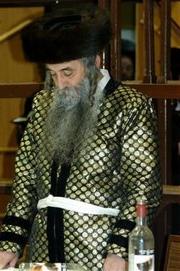 Further, all the El Al representatives were perfectly polite and they applied the security measures even-handedly with one litle exception: I saw a 90-year old Hasid get a free pass by the second security gate. I admit part of me was thinking, “Are you kidding me? You could hide a small militia in that beard of his.” I wisely kept this thought to myself as I did not relish the thought of a full cavity search.
The flight itself was very comfortable. I was served a meal that was both delicious and approved by Rabbi Levin of the Kashruth Council of Canada. There was one thing I found somewhat peculiar. After all that stringent security, I was given a metal knife with my meal.
My theory is that the knife is a dare to would-be hijackers. I wouldn’t be surprised if all the flight attendants were krav maga experts. That 100-pound stewardess? Her body language is screaming, “You even think about storming the cockpit with your cutlery and I will snap you in two like an afikomen.”
I hope there’s gefilte fish on my return flight as well.
Friday, June 16, 2006
Stratford finally changes its tune
This is an article from Kamal Al-Solaylee from the June 16 edition of The Globe and Mail:
 Djanet Sears has a problem with being first. As previews begin next week for a revival of her 1997 Governor-General's Award-winning play Harlem Duet, she officially becomes the first black playwright and the first black female director in the 54-year history of the Stratford Festival of Canada. The production will also be the first on any of its stages with an all-black cast.
When her follow-up play The Adventures of a Black Girl in Search of God was picked up by Mirvish Productions in 2003 for an extended run at Harbourfront Centre Theatre, Sears became the first black Canadian playwright to be featured on the playbill of this country's largest commercial producer.
Impressive, even if shockingly belated, achievements all, but the jury inside Sears's head is still out on what they mean in the long term. "Firsts are only great as the beginning of something," she explains in an interview in Toronto earlier this week. "If it's not, it's the only one." The racial-representation ratio in Canada's larger theatres is far from perfect, but there are some positive signs.
In 2005 Mirvish Productions followed up Adventures with a production of Trey Anthony's black-women confessional 'da Kink in My Hair, to date the most commercially successful single production of a Canadian play in the history of Toronto. At Stratford, there's a feeling that the end of Richard Monette's reign and changes in the festival's artistic directorship structure will bring about more culturally diverse programming.
"Things are changing, people are looking around and saying 'The world doesn't look like us here,' " Sears acknowledges.
The world of Harlem Duet certainly doesn't look like anything Stratford has created before even if one of its key players should feel at home in a festival with classical and Shakespeare credentials. The play is a modern reworking of Othello from an all-black perspective. Set over three time periods -- the 1860s, 1928 and the present -- Harlem Duet traces three relationships between Othello (Nigel Shawn Williams) and his black lover Billie (Karen Robinson), all of which end when he leaves her for an offstage white woman.
The play dwells the longest on the present in which Othello and Billie have already broken up but continue a sexual relationship that's both romantic and politically bifurcated. There are many debates in Harlem Duet but the central one examines integration versus separatism among the black community. Whether they embrace the colour of their skin (as Billie does) or refuse to be seen as just that (as Othello insists), "the burden of race" weighs as heavily on the characters in the play as it has for more than two decades of playwriting on their creator. I ask Sears if she's ever tired of carrying such a burden on behalf of a community as diverse as Canada's black population.
 "You're going to carry it anyway," she says. "When you hear that there have been three shootings, you go, 'Oh my god, I hope they are not black.' You identify with your race even when you don't know who these people are. You know it's going to have an effect on you, whether you like it or not. If you are going to have the burden, you might as well do something with it."
Rereading the original text of Harlem Duet was like downloading a soundtrack of the nineties' racial debates, from the phenomenon of The Bell Curve (a book that relates intelligence to race) to the O. J. Simpson trial. The latter case is particularly worth reprising. It may have been eclipsed by more devastating incidents (Katrina, for instance), but when the play opened in Toronto in 1997, the "Othello Syndrome" was still fresh.
"Jealous black men who are going to kill the white girl," Sears explains it in more straightforward terms. Yet, Harlem Duet doesn't attempt any kind of apology on behalf of Othello or Billie.
"The error that people often make is to think it's one-sided," says Sears. "I'm Billie and I'm Othello. That's the conflict. This is the effect of 400 years of white supremacy [and] what that has done to the psyche of black people."
Even if Sears has updated some of the references in the play to include Condoleezza Rice and Oprah Winfrey as the new faces of black America, Harlem Duet holds up, Sears suggests, because it asks questions and avoids answers.
"I find the questions still alive and real," says Sears. What's more disturbing perhaps is that these questions have passed on to another group in North America, its Arab and Muslim population, who collectively find themselves the latest addition to a long list of dangerous and suspicious racial others.
But any new meanings to Harlem Duet don't tone down or nullify its essential blackness. Harlem is more than a location backdrop for a postmodern twist on Othello.
"There's something about Harlem," Sears says. "I can't liken it to anything in the mainstream world. The place of Harlem Renaissance, the place of extraordinary poverty, of riots. . . . It feels like an axis, a central point, a hot spot."
 Djanet Sears has a problem with being first. As previews begin next week for a revival of her 1997 Governor-General's Award-winning play Harlem Duet, she officially becomes the first black playwright and the first black female director in the 54-year history of the Stratford Festival of Canada. The production will also be the first on any of its stages with an all-black cast.
When her follow-up play The Adventures of a Black Girl in Search of God was picked up by Mirvish Productions in 2003 for an extended run at Harbourfront Centre Theatre, Sears became the first black Canadian playwright to be featured on the playbill of this country's largest commercial producer.
Impressive, even if shockingly belated, achievements all, but the jury inside Sears's head is still out on what they mean in the long term. "Firsts are only great as the beginning of something," she explains in an interview in Toronto earlier this week. "If it's not, it's the only one." The racial-representation ratio in Canada's larger theatres is far from perfect, but there are some positive signs.
In 2005 Mirvish Productions followed up Adventures with a production of Trey Anthony's black-women confessional 'da Kink in My Hair, to date the most commercially successful single production of a Canadian play in the history of Toronto. At Stratford, there's a feeling that the end of Richard Monette's reign and changes in the festival's artistic directorship structure will bring about more culturally diverse programming.
"Things are changing, people are looking around and saying 'The world doesn't look like us here,' " Sears acknowledges.
The world of Harlem Duet certainly doesn't look like anything Stratford has created before even if one of its key players should feel at home in a festival with classical and Shakespeare credentials. The play is a modern reworking of Othello from an all-black perspective. Set over three time periods -- the 1860s, 1928 and the present -- Harlem Duet traces three relationships between Othello (Nigel Shawn Williams) and his black lover Billie (Karen Robinson), all of which end when he leaves her for an offstage white woman.
The play dwells the longest on the present in which Othello and Billie have already broken up but continue a sexual relationship that's both romantic and politically bifurcated. There are many debates in Harlem Duet but the central one examines integration versus separatism among the black community. Whether they embrace the colour of their skin (as Billie does) or refuse to be seen as just that (as Othello insists), "the burden of race" weighs as heavily on the characters in the play as it has for more than two decades of playwriting on their creator. I ask Sears if she's ever tired of carrying such a burden on behalf of a community as diverse as Canada's black population.
 "You're going to carry it anyway," she says. "When you hear that there have been three shootings, you go, 'Oh my god, I hope they are not black.' You identify with your race even when you don't know who these people are. You know it's going to have an effect on you, whether you like it or not. If you are going to have the burden, you might as well do something with it."
Rereading the original text of Harlem Duet was like downloading a soundtrack of the nineties' racial debates, from the phenomenon of The Bell Curve (a book that relates intelligence to race) to the O. J. Simpson trial. The latter case is particularly worth reprising. It may have been eclipsed by more devastating incidents (Katrina, for instance), but when the play opened in Toronto in 1997, the "Othello Syndrome" was still fresh.
"Jealous black men who are going to kill the white girl," Sears explains it in more straightforward terms. Yet, Harlem Duet doesn't attempt any kind of apology on behalf of Othello or Billie.
"The error that people often make is to think it's one-sided," says Sears. "I'm Billie and I'm Othello. That's the conflict. This is the effect of 400 years of white supremacy [and] what that has done to the psyche of black people."
Even if Sears has updated some of the references in the play to include Condoleezza Rice and Oprah Winfrey as the new faces of black America, Harlem Duet holds up, Sears suggests, because it asks questions and avoids answers.
"I find the questions still alive and real," says Sears. What's more disturbing perhaps is that these questions have passed on to another group in North America, its Arab and Muslim population, who collectively find themselves the latest addition to a long list of dangerous and suspicious racial others.
But any new meanings to Harlem Duet don't tone down or nullify its essential blackness. Harlem is more than a location backdrop for a postmodern twist on Othello.
"There's something about Harlem," Sears says. "I can't liken it to anything in the mainstream world. The place of Harlem Renaissance, the place of extraordinary poverty, of riots. . . . It feels like an axis, a central point, a hot spot."
Friday, June 09, 2006
Thursday, June 08, 2006
Auditions - The MT Space
The MT Space is auditioning actors and actors-dancers for the new Season 2006/2007:
Friday June 16th: 6:30 pm- 9:30 pm
Sunday June 18th: 10:00 am- 1:00 pm
Friday June 23rd: 6:30 pm – 9:30 pm
Saturday June 24th: 10:00 am – 1:00 pm
The Season includes two theatre productions:
Yes or No!
Fall 2006
(Rehearsals run from July – October; Show dates Oct 25 – 29)
On the night of the referendum in 1995 a young Yugoslav Woman draws a Canadian concert cellist into her own crisis of identity- an original piece in progress by local playwright Douglas Campbell
Pinteresque
Spring 2007
A development and creation workshop that will result in a physically – oriented performance about Canadian war refugees in relation to Harold Pinter’s Nobel Prize lecture in 2005, "Art, Truth and Politics "
Wear comfortable clothes and be prepared to improvise.
The project encourages the participation of artists with diverse cultural and ethnic backgrounds.
To reserve a spot in one of the above sessions please contact Majdi Bou-Matar at (519) 585 7763 or at info@mtspace.ca; check www.mtspace.ca
Friday June 16th: 6:30 pm- 9:30 pm
Sunday June 18th: 10:00 am- 1:00 pm
Friday June 23rd: 6:30 pm – 9:30 pm
Saturday June 24th: 10:00 am – 1:00 pm
The Season includes two theatre productions:
Yes or No!
Fall 2006
(Rehearsals run from July – October; Show dates Oct 25 – 29)
On the night of the referendum in 1995 a young Yugoslav Woman draws a Canadian concert cellist into her own crisis of identity- an original piece in progress by local playwright Douglas Campbell
Pinteresque
Spring 2007
A development and creation workshop that will result in a physically – oriented performance about Canadian war refugees in relation to Harold Pinter’s Nobel Prize lecture in 2005, "Art, Truth and Politics "
Wear comfortable clothes and be prepared to improvise.
The project encourages the participation of artists with diverse cultural and ethnic backgrounds.
To reserve a spot in one of the above sessions please contact Majdi Bou-Matar at (519) 585 7763 or at info@mtspace.ca; check www.mtspace.ca
Wednesday, June 07, 2006
Call for submissions - Gateway Theatre
Gateway Theatre, Richmond's professional theatre company, invites
submissions from established and emerging Canadian playwrights for
SceneFirst, our New Play Development Program. Now into its third season,
SceneFirst focuses on developing and producing new works as well as
providing developmental support for many other works in progress. Last
year we received over 100 submissions and four were selected for public
readings.
Scripts selected for SceneFirst will receive a short workshop and staged
reading in March 2007, and will be automatically short-listed for
production in our upcoming seasons.
Deadline for Submissions: October 31, 2006.
GUIDELINES:
1. Scripts must be Canadian, original, unproduced and between 60
and 120 minutes in length. Scripts previously submitted to SceneFirst
will not be accepted.
2. Playwrights must be citizens or landed immigrants of Canada.
3. We will accept one submission per playwright.
4. Political plays are encouraged. This includes the politics of
government, the workplace, relationships, evolving communities etc.
5. Cast size: Plays in our season usually range in cast size from
1-5 actors.
6. Plays of specific ethnic origins are welcome but must be
submitted in an English translation.
7. Please include a one-page synopsis with your submission. The
Synopsis should include theme, plot, and length of play, character
breakdown and any doubling possibilities.
8. Please include a title page, with the name of play, author's
name and contact information.
9. Submissions must be in hard copy only (emails will NOT be
accepted), typed or word-processed, single sided, and minimum 11-point
font on white paper. All pages must be numbered with the title of the
play on each page.
10. Please DO NOT submit original copies; Gateway Theatre will not
return materials.
Please note:
- Gateway Theatre encourages contemporary casting for all play
readings and productions.
- Playwrights whose scripts are selected are encouraged to attend
the workshop and staged reading. An honourarium will be provided to
writers however travel is the responsibility of the artist.
Scripts should be mailed to:
Barbara Tomasic, Artistic Associate
SCENEFIRST
Gateway Theatre
6500 Gilbert Road,
Richmond, B.C. V7C 3V4
submissions from established and emerging Canadian playwrights for
SceneFirst, our New Play Development Program. Now into its third season,
SceneFirst focuses on developing and producing new works as well as
providing developmental support for many other works in progress. Last
year we received over 100 submissions and four were selected for public
readings.
Scripts selected for SceneFirst will receive a short workshop and staged
reading in March 2007, and will be automatically short-listed for
production in our upcoming seasons.
Deadline for Submissions: October 31, 2006.
GUIDELINES:
1. Scripts must be Canadian, original, unproduced and between 60
and 120 minutes in length. Scripts previously submitted to SceneFirst
will not be accepted.
2. Playwrights must be citizens or landed immigrants of Canada.
3. We will accept one submission per playwright.
4. Political plays are encouraged. This includes the politics of
government, the workplace, relationships, evolving communities etc.
5. Cast size: Plays in our season usually range in cast size from
1-5 actors.
6. Plays of specific ethnic origins are welcome but must be
submitted in an English translation.
7. Please include a one-page synopsis with your submission. The
Synopsis should include theme, plot, and length of play, character
breakdown and any doubling possibilities.
8. Please include a title page, with the name of play, author's
name and contact information.
9. Submissions must be in hard copy only (emails will NOT be
accepted), typed or word-processed, single sided, and minimum 11-point
font on white paper. All pages must be numbered with the title of the
play on each page.
10. Please DO NOT submit original copies; Gateway Theatre will not
return materials.
Please note:
- Gateway Theatre encourages contemporary casting for all play
readings and productions.
- Playwrights whose scripts are selected are encouraged to attend
the workshop and staged reading. An honourarium will be provided to
writers however travel is the responsibility of the artist.
Scripts should be mailed to:
Barbara Tomasic, Artistic Associate
SCENEFIRST
Gateway Theatre
6500 Gilbert Road,
Richmond, B.C. V7C 3V4
Thursday, June 01, 2006
Nobel laureate flays Bush
This article was written by Haroon Siddiqui in the June 1 edition of The Toronto Star:
Gunter Grass, celebrated German novelist, playwright, poet, essayist, sculptor and commentator, is a living legend. When this Nobel laureate speaks, people listen.
His address in Berlin to the annual Congress of International PEN, the worldwide organization of writers, had been much anticipated, especially given his long admonition to intellectuals to speak up on the political and moral issues of the day.
He himself has done so all his life, most famously against the Nazi past and contemporary neo-Nazism and xenophobia. He has not always been right, of course, having opposed post-Cold War German unification.
Grass, at 78 still spry and energetic, quickly gets into his topic, "The hubris of the world's only superpower," and proceeds to offer a sweeping critique.
His words find resonance among the writers gathered here, including another Nobel laureate, South African novelist Nadine Gordimer.
"Armed force is used by this superpower to defeat the terrorism it is itself responsible for," Grass says, citing Osama bin Laden, the by-product of American support for Afghan jihadists in the 1980s. "The war (on Iraq), deliberately started in blatant disdain of the laws of civilized societies, produces still more terror."
Yet George W. Bush is searching for new enemies and targets.
"Dictatorships, and there are plenty to choose from, are referred to as rogue states and threatened vociferously with military strikes, including the deployment of nuclear weapons. But it only further stabilizes the fundamentalist power systems in those countries.
"Whether the term `axis of evil' is used to refer to Iran or North Korea or Syria, politics could not be more stupid and hence more dangerous. Yet the entire world is watching and pretending to be powerless."
Grass quotes liberally from the blistering speech given last year by British playwright Harold Pinter in accepting the Nobel Prize for Literature: "The United States supported and, in many cases, engendered every right-wing military dictatorship in the world after World War II — Indonesia, Greece, Uruguay, Brazil, Paraguay, Haiti, Turkey, the Philippines, Guatemala, El Salvador and, of course, Chile ...
"Hundreds of thousands of deaths took place in those countries ... but you wouldn't know it. The crimes of the U.S. have been systematic, constant, vicious, and remorseless but very few people have actually talked about them.
"You have to hand it to America. It has exercised quite a clinical manipulation of power worldwide while masquerading as a force for universal good. It's brilliant, even witty, a highly successful act of hypnosis. How many people do you have to kill before you qualify to be described as a mass murderer and a war criminal?"
Having cited Pinter, Grass adds his own condemnation of "the hypocritical method of keeping the body count" in Iraq and Afghanistan.
"Although we meticulously keep count of the victims of terror attacks — terrible though their number is — nobody bothers to count the dead caused by American bombs or rocket attacks."
The death toll from America's "three Gulf Wars," as he called it — "the first one having been fought by Saddam Hussein against Iran, with support from the United States" — runs into hundreds of thousands.
"In Western evaluation, not only are there first-, second- or third class citizens among the living, but also among the dead."
As for Bush and Tony Blair, he says, "whenever their lies lack persuasive power, they put God into harness. Hypocrisy is written all over their faces. They are like the priests and missionaries of old who used to bless weapons and carry death with their Bibles into distant countries."
The enormity of U.S.-initiated death, destruction and torture, places a burden on the citizens of democracy to be more vigilant: "Who wanted this war? What are the lies that have disguised its true purpose? Who profits from it? Whose shares go up because of it?"
In a post-speech interview, I ask Grass about governments ignoring the electorate between elections, as those did in Britain, Italy and Spain, which joined the war on Iraq despite overwhelming public opposition.
"In the last 10 years, lobbies have become stronger than the government, in the U.S. and other democracies," Grass responds. "They cannot change policy, for example, on health without the pharmaceutical industry, or farming policy without the farm groups. Lobbies are too powerful," the most powerful being the ones wanting war.
Even though Germany resisted the Iraq war, there has been a change of atmosphere since the election of a conservative government (just like in Canada).
"There are voices in this country saying, `the U.S. is our ally, we have to stand by it, we have to do this and we have to do that for it.
"I hope it will not develop like that in Canada," Grass says.
Gunter Grass, celebrated German novelist, playwright, poet, essayist, sculptor and commentator, is a living legend. When this Nobel laureate speaks, people listen.
His address in Berlin to the annual Congress of International PEN, the worldwide organization of writers, had been much anticipated, especially given his long admonition to intellectuals to speak up on the political and moral issues of the day.
He himself has done so all his life, most famously against the Nazi past and contemporary neo-Nazism and xenophobia. He has not always been right, of course, having opposed post-Cold War German unification.
Grass, at 78 still spry and energetic, quickly gets into his topic, "The hubris of the world's only superpower," and proceeds to offer a sweeping critique.
His words find resonance among the writers gathered here, including another Nobel laureate, South African novelist Nadine Gordimer.
"Armed force is used by this superpower to defeat the terrorism it is itself responsible for," Grass says, citing Osama bin Laden, the by-product of American support for Afghan jihadists in the 1980s. "The war (on Iraq), deliberately started in blatant disdain of the laws of civilized societies, produces still more terror."
Yet George W. Bush is searching for new enemies and targets.
"Dictatorships, and there are plenty to choose from, are referred to as rogue states and threatened vociferously with military strikes, including the deployment of nuclear weapons. But it only further stabilizes the fundamentalist power systems in those countries.
"Whether the term `axis of evil' is used to refer to Iran or North Korea or Syria, politics could not be more stupid and hence more dangerous. Yet the entire world is watching and pretending to be powerless."
Grass quotes liberally from the blistering speech given last year by British playwright Harold Pinter in accepting the Nobel Prize for Literature: "The United States supported and, in many cases, engendered every right-wing military dictatorship in the world after World War II — Indonesia, Greece, Uruguay, Brazil, Paraguay, Haiti, Turkey, the Philippines, Guatemala, El Salvador and, of course, Chile ...
"Hundreds of thousands of deaths took place in those countries ... but you wouldn't know it. The crimes of the U.S. have been systematic, constant, vicious, and remorseless but very few people have actually talked about them.
"You have to hand it to America. It has exercised quite a clinical manipulation of power worldwide while masquerading as a force for universal good. It's brilliant, even witty, a highly successful act of hypnosis. How many people do you have to kill before you qualify to be described as a mass murderer and a war criminal?"
Having cited Pinter, Grass adds his own condemnation of "the hypocritical method of keeping the body count" in Iraq and Afghanistan.
"Although we meticulously keep count of the victims of terror attacks — terrible though their number is — nobody bothers to count the dead caused by American bombs or rocket attacks."
The death toll from America's "three Gulf Wars," as he called it — "the first one having been fought by Saddam Hussein against Iran, with support from the United States" — runs into hundreds of thousands.
"In Western evaluation, not only are there first-, second- or third class citizens among the living, but also among the dead."
As for Bush and Tony Blair, he says, "whenever their lies lack persuasive power, they put God into harness. Hypocrisy is written all over their faces. They are like the priests and missionaries of old who used to bless weapons and carry death with their Bibles into distant countries."
The enormity of U.S.-initiated death, destruction and torture, places a burden on the citizens of democracy to be more vigilant: "Who wanted this war? What are the lies that have disguised its true purpose? Who profits from it? Whose shares go up because of it?"
In a post-speech interview, I ask Grass about governments ignoring the electorate between elections, as those did in Britain, Italy and Spain, which joined the war on Iraq despite overwhelming public opposition.
"In the last 10 years, lobbies have become stronger than the government, in the U.S. and other democracies," Grass responds. "They cannot change policy, for example, on health without the pharmaceutical industry, or farming policy without the farm groups. Lobbies are too powerful," the most powerful being the ones wanting war.
Even though Germany resisted the Iraq war, there has been a change of atmosphere since the election of a conservative government (just like in Canada).
"There are voices in this country saying, `the U.S. is our ally, we have to stand by it, we have to do this and we have to do that for it.
"I hope it will not develop like that in Canada," Grass says.
Misled by mulitculturalism
This article was written by Tarek Fatah, host of The Muslim Chronicle. It appeared in the June 1 edition of The Toronto Star:
One recent Friday, I attended an Iranian Canadian event in Toronto where I was, perhaps, the only non-white, non-Iranian among the 1,000 immaculately turned out guests. When I asked friends at the table why there were no black, Chinese or Arabs at the event, I drew blank stares of bewilderment. Unsaid, but easily understood in the silence was the answer: "Why would a Chinese Canadian or an Indian Canadian be interested in an Iranian event?"
So, I pushed the envelope further and asked: "If you feel a black or Chinese Canadian would not understand Iranian issues, why do you feel white Canadians would? Are they better disposed to grasp international issues than, say, an Arab Canadian?" I asked.
The interesting part of the evening was the reaction of a white Canadian MPP, who shared our table. She was quite taken aback by my candour and admitted: "I had not noticed the absence of these communities until you pointed it out."
Of course, this celebration of ghettoization is not the exclusive preserve of Iranian Canadians; other communities have mastered their own marginalization with equal enthusiasm, if not more.
Earlier that week, I had attended a Tamil Canadian event, where, too, the situation was the same. Only Tamil Canadians and white Canadians were invited. No Arabs, no Iranians, no Chinese were among the audience; my presence being the anomaly. When I raised the same issue with my Tamil hosts, they, to their credit, were far more willing to accept the fact that they had overlooked the issue out of neglect.
This strange relationship of Canada's ethnics with the dominant community raises the question: Is this segregation a legacy of our colonial past, the rise of identity politics or the direct result of institutional multiculturalism?
Why is it that whenever the Chinese or Pakistani or any other ethnic minority organizes events, the only other community invited to participate is the dominant white community?
Canada's ethno-cultural communities, who celebrated the advent of multiculturalism in the 1960s, are today increasingly cynical about it. One harsh view of multiculturalism comes from fiery Italian-born constitutional lawyer Rocco Galati, who scoffs at the institution, calling it "the bone thrown to us dogs by the English and French masters."
Galati suggests the institution has benefited only a very small number of organizations, which, he says, "extol the virtues of this nonsense for their own limited financial gain to the detriment of the equality and dignity of the rest of us."
Dismissing any benefits of multiculturalism, Galati says, "What we have in Canada is multisegregation de facto, and regrettably de jure."
Rocco Galati's cynicism may offend some, but there is no doubt that not only have the dominant communities of Canada successfully segregated us into our sometimes prosperous ghettoes, they have had near full co-operation by leaders of these communities. No wonder, whether it is Iranians or Tamils, they, like all other ethnic communities, feel they need to relate only to the mainstream community, not share their issues with fellow citizens from other racial minorities.
In this era of identity politics, where people are being pushed into religious and racial silos, multiculturalism can very easily provide fertile soil for nurturing our primitiveness, rather than celebrating reason and our common humanity.
Nobel Prize-winning author Amartya Sen, who as a child had to flee Pakistan for India to escape Hindu-Muslim carnage in 1947, has touched on this subject in his new book, Identity and Violence: The Illusion of Destiny.
Sen suggests that we, as human beings, cannot be classified simply in racial or religious compartments, arguing that we are all what we make of ourselves, not just what we inherit from our parents. He writes: "Our shared humanity gets savagely challenged when the manifold divisions in the world are unified into one allegedly dominant system of classification — in terms of religion, or community, or culture, or nation, or civilization ..."
It is time for ethnic minorities to take the next step forward in building a civic society based on respect, dignity and social justice. It is time for Indo-Canadians to interact with Arab Canadians, not only at nomination and leadership bid meetings of prominent white politicians, but to get to know each other as fellow Canadians. It is time for Iranian Canadians to attend the Harry Jerome Awards for black Canadians. That would be a multiculturalism true to the concept's original spirit.
Otherwise, we risk creating a fragmented nation, divided into 21st century tribes, segregated into silos, easily manipulated. While I value diversity, I am tired of celebrating it. What I truly wish to celebrate is our common humanity, not our tribal loyalties and affinities.
One recent Friday, I attended an Iranian Canadian event in Toronto where I was, perhaps, the only non-white, non-Iranian among the 1,000 immaculately turned out guests. When I asked friends at the table why there were no black, Chinese or Arabs at the event, I drew blank stares of bewilderment. Unsaid, but easily understood in the silence was the answer: "Why would a Chinese Canadian or an Indian Canadian be interested in an Iranian event?"
So, I pushed the envelope further and asked: "If you feel a black or Chinese Canadian would not understand Iranian issues, why do you feel white Canadians would? Are they better disposed to grasp international issues than, say, an Arab Canadian?" I asked.
The interesting part of the evening was the reaction of a white Canadian MPP, who shared our table. She was quite taken aback by my candour and admitted: "I had not noticed the absence of these communities until you pointed it out."
Of course, this celebration of ghettoization is not the exclusive preserve of Iranian Canadians; other communities have mastered their own marginalization with equal enthusiasm, if not more.
Earlier that week, I had attended a Tamil Canadian event, where, too, the situation was the same. Only Tamil Canadians and white Canadians were invited. No Arabs, no Iranians, no Chinese were among the audience; my presence being the anomaly. When I raised the same issue with my Tamil hosts, they, to their credit, were far more willing to accept the fact that they had overlooked the issue out of neglect.
This strange relationship of Canada's ethnics with the dominant community raises the question: Is this segregation a legacy of our colonial past, the rise of identity politics or the direct result of institutional multiculturalism?
Why is it that whenever the Chinese or Pakistani or any other ethnic minority organizes events, the only other community invited to participate is the dominant white community?
Canada's ethno-cultural communities, who celebrated the advent of multiculturalism in the 1960s, are today increasingly cynical about it. One harsh view of multiculturalism comes from fiery Italian-born constitutional lawyer Rocco Galati, who scoffs at the institution, calling it "the bone thrown to us dogs by the English and French masters."
Galati suggests the institution has benefited only a very small number of organizations, which, he says, "extol the virtues of this nonsense for their own limited financial gain to the detriment of the equality and dignity of the rest of us."
Dismissing any benefits of multiculturalism, Galati says, "What we have in Canada is multisegregation de facto, and regrettably de jure."
Rocco Galati's cynicism may offend some, but there is no doubt that not only have the dominant communities of Canada successfully segregated us into our sometimes prosperous ghettoes, they have had near full co-operation by leaders of these communities. No wonder, whether it is Iranians or Tamils, they, like all other ethnic communities, feel they need to relate only to the mainstream community, not share their issues with fellow citizens from other racial minorities.
In this era of identity politics, where people are being pushed into religious and racial silos, multiculturalism can very easily provide fertile soil for nurturing our primitiveness, rather than celebrating reason and our common humanity.
Nobel Prize-winning author Amartya Sen, who as a child had to flee Pakistan for India to escape Hindu-Muslim carnage in 1947, has touched on this subject in his new book, Identity and Violence: The Illusion of Destiny.
Sen suggests that we, as human beings, cannot be classified simply in racial or religious compartments, arguing that we are all what we make of ourselves, not just what we inherit from our parents. He writes: "Our shared humanity gets savagely challenged when the manifold divisions in the world are unified into one allegedly dominant system of classification — in terms of religion, or community, or culture, or nation, or civilization ..."
It is time for ethnic minorities to take the next step forward in building a civic society based on respect, dignity and social justice. It is time for Indo-Canadians to interact with Arab Canadians, not only at nomination and leadership bid meetings of prominent white politicians, but to get to know each other as fellow Canadians. It is time for Iranian Canadians to attend the Harry Jerome Awards for black Canadians. That would be a multiculturalism true to the concept's original spirit.
Otherwise, we risk creating a fragmented nation, divided into 21st century tribes, segregated into silos, easily manipulated. While I value diversity, I am tired of celebrating it. What I truly wish to celebrate is our common humanity, not our tribal loyalties and affinities.
Tuesday, May 23, 2006
Pictures from the HK Fringe
We had the first of our two readings at the Hong Kong Fringe Club last night. John Ng's play I. and my play Peking Duck pleased our audience of ex-pats, theatre artists, and Fringe-goers.
Here are some photos from the event:
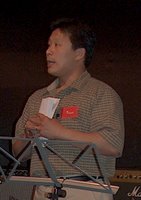 Jovanni introducing the evening.
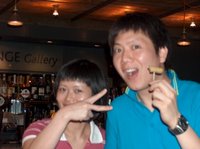 At right, actors Fiona Liu and Alan Fong enjoying (appropriately enough) Peking Duck rolls.
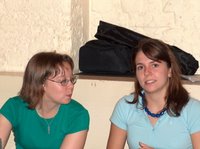 Kendra and actor Danielle Biddle at the Fringe.
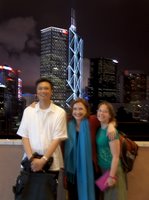 John, Leanna, and Kendra back at the hotel.
Here are some photos from the event:
 Jovanni introducing the evening.
 At right, actors Fiona Liu and Alan Fong enjoying (appropriately enough) Peking Duck rolls.
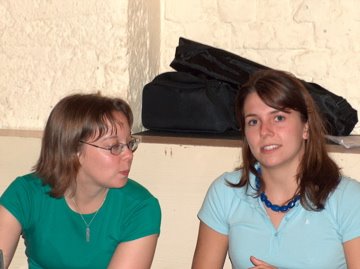 Kendra and actor Danielle Biddle at the Fringe.
 John, Leanna, and Kendra back at the hotel.
Monday, May 22, 2006
John Ng's Top 10 Signs You're Jet-Lagged in HK
10. You keep flipping through the TV channels at 3 a.m. hoping to find a shot of Ben Mulroney and Tanya Kim.
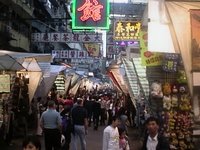 9. While haggling at the street market, you insist the vendor knock off the GST.
8. You look for the Texas Hold'em Mah-Jongg table at the Macau casino.
7. Two words: McRice Burger.
 6. During the dolphin boat tour, you swear you hear the captain yell, "I think I found Nemo!"
5. You get into a cab and the first thing you say to the driver is "Whatever you do, just avoid the DVP."
4. Over dim sum, you ask the waiter, "You think Pat Quinn should've been fired, lah?"
 3. You actually just want a massage at the massage parlour.
2. You buy a bag of peanuts to feed the cockroaches in the park.
1. You see a big Jackie Chan billboard and say to yourself, "I can kick his sorry ass!"
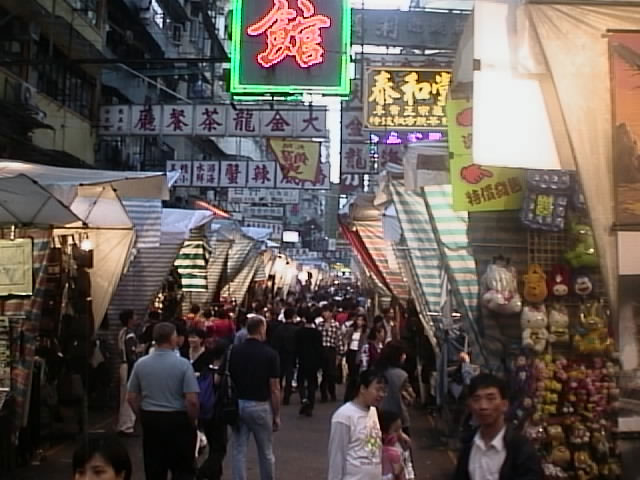 9. While haggling at the street market, you insist the vendor knock off the GST.
8. You look for the Texas Hold'em Mah-Jongg table at the Macau casino.
7. Two words: McRice Burger.
 6. During the dolphin boat tour, you swear you hear the captain yell, "I think I found Nemo!"
5. You get into a cab and the first thing you say to the driver is "Whatever you do, just avoid the DVP."
4. Over dim sum, you ask the waiter, "You think Pat Quinn should've been fired, lah?"
 3. You actually just want a massage at the massage parlour.
2. You buy a bag of peanuts to feed the cockroaches in the park.
1. You see a big Jackie Chan billboard and say to yourself, "I can kick his sorry ass!"
Sunday, May 21, 2006
The language of theatre
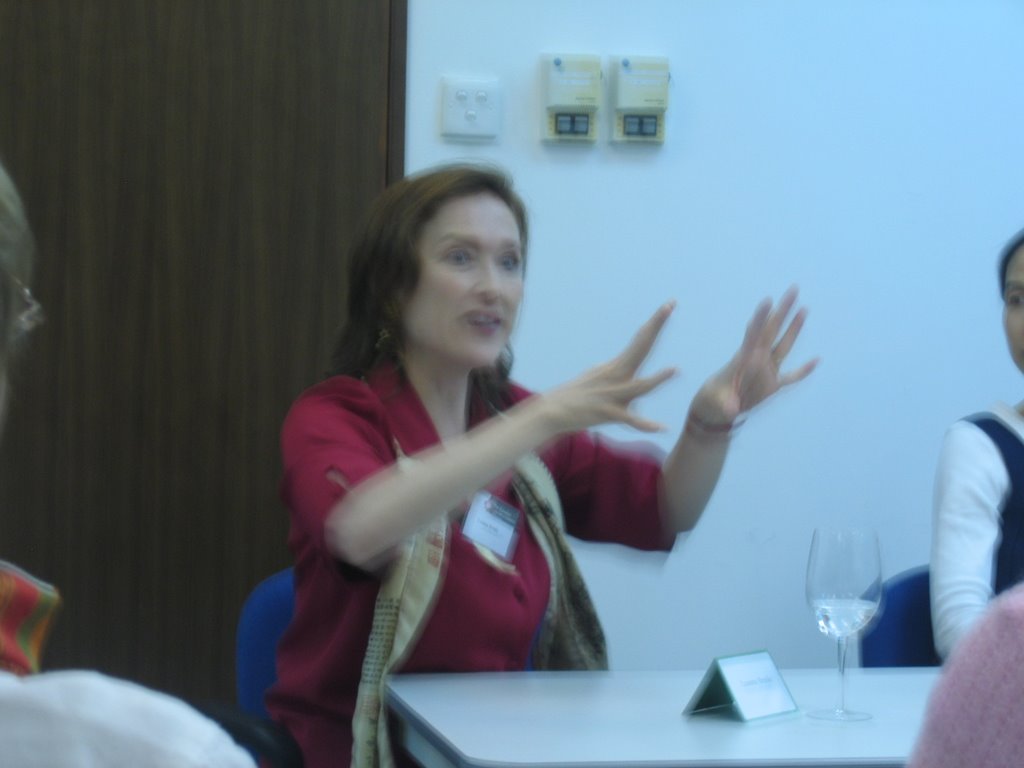
Today we have a guest blogger ... actress/playwright/spouse extraordinaire Leanna Brodie. Leanna was a panelist on Cahoots' roundtable discussion, Theatre Beyond Borders. We actually sat at two rectangular tables. But that's not really the point. It's a good thing Leanna's telling you about the panel and not me ...
• An internationally-touring physical theatre company comprised of a ballet-trained Hong Kong Chinese artist and a Lecoq-educated Scot.
• An HK artistic director of a well-established text-based theatre who wants, among many other things, to do a Cantonese stage adaptation of Crimson Tide.
• A Canadian playwright/radio writer/librettist/actor/director/associate artistic director working on a play in English about Tiananmen Square.
• A playwright and actor whose current piece deals with a schoolteacher in a one-room school in rural Canada circa 1938.
How on earth were we going to find anything to talk about for ninety minutes?
As it turns out, the challenge was to shut us up. Or maybe that was just me. (Note to self: Self, if you EVER get asked to do a panel again, remember to breathe; breathing results in oxygen to the brain, and automatically causes a pause to the talking, which in your case is a good thing.) Actually, we were all eager to share what we love about our own cultures and ways of working, as well as to discuss the problems we face. For example, Canadian artists understand the battle for workspace, and we in Toronto have lost three affordable theatres in almost as many months – but how do you compare that with the scramble for a tiny corner of some of the most expensive real estate in the world, where not only rehearsal but even performance space sometimes rents by the hour?
The discussion really had two segments: first Ko, Marjorie, Bonni, and Sean talked in turn about their processes of creation and production: then, when he got to me, Jovanni (as moderator) asked some questions about translation that launched a spirited discussion of how (and indeed, whether) the work that we do in our specific communities can travel to the outside world.
Marjorie brought up the tricky convention of people speaking onstage in one language when you know they would actually be speaking another (for example, in China Doll, English stands in for Mandarin). Bonni and Sean of Theatre du Pif talked about how their grounding in physical communication was a way of bridging the gaps of language not only between them and their various audiences, but also between themselves.
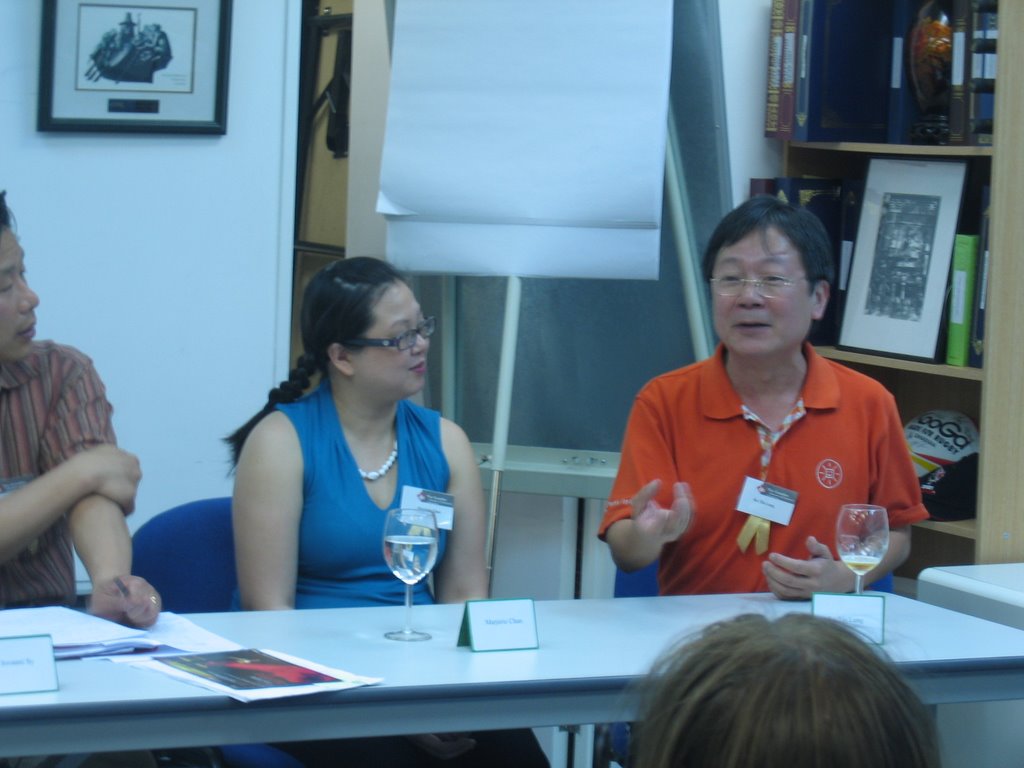 Ko spoke of his desire to bring together the various linguistic and cultural communities in Hong Kong itself: as the first Chinese-speaking artistic director of Chung Ying Theatre, he contends on a daily basis with the deep divisions between English-speaking “ex-pats”, Cantonese-speaking Hong Kong citizens, and growing numbers of Mandarin-speaking immigrants from mainland China, among others. (I find it fascinating, by the way, that Caucasians -- who may have lived and worked here for five months or fifty years -- are called “ex-pats”, while others are “immigrants”. One local journalist recently told me he was trying to get Westerners in Hong Kong to refer to themselves as “migrant workers”, but without much success.)
I found myself trying to communicate something about the relationship between English- and French-language drama in Canada, and of how, in Quebec, not only the language but the level of that language has political implications (like Michel Tremblay in 1968 causing a firestorm by writing in joual). I also related a conversation that Jovanni and I had with Vanessa Porteous of Alberta Theatre Projects, who commented that one problem ATP finds with bringing plays from other parts of the country is that Calgary these days is a “city of winners”, while Canadian theatre is in love with losers. Our audience brought many fascinating perspectives, too: like the impossibility of doing The Vagina Monologues or Love Letters for a local Cantonese audience without “acting stuff out” (I have real problems with the conventional Vagina Monologues, so I can sympathise with HK audiences: but that’s for another blog...)
Thanks to Cahoots and the Canadian Chamber of Commerce, for an intimate and enlightening cultural encounter: and to Jovanni for presiding with style!
Aw gosh, you're making me blush. Thank you Leanna for being a wonderful guest panelist and blogger!
Saturday, May 20, 2006
Damn sneaky dolphins

 Okay, pink dolphins may be beautiful but they are unbelievably hard to photograph. After about a hundred shots (thank god for digital cameras), these two are the best I could do. Which tells you how sucky the other 98 were. I think I'll stick to photographing people.
 Anyway, it was an amazing dolphin tour (other than those slippery bastards). Thanks for arranging it, Marjorie!
Thursday, May 18, 2006
The ride back from Macau

It was a white-knuckles ride on the hydrofoil back from Macau. Hard rain throughout and some enormous waves. You can see the view from the ship's window at the right. We were lucky: Typhoon Chanchu headed east of HK.
Others in Southern China and the Philippines weren't as lucky.
Wednesday, May 17, 2006
Waiting for Chanchu

Well, here's a first for Cahoots. We're in the middle of our second day of theatre workshops with the amazing students from The International School of Macao and we're not sure where we'll be sleeping tonight. The reason? A typhoon warning. We're still waiting to hear whether it'll be safe to take the hydrofoil back to Hong Kong.
Monday, May 15, 2006

First rehearsal
After months of preparation and anticipation, we had our first rehearsal today. We met at the Canadian Chamber of Commerce on a cool Sunday afternoon. We exchanged some brief introductions and then dove right in.
Hearing China Doll and I. read by Hong Kong actors was an incredible experience. John Ng commented that when he heard the Cantonese dialogue in his play read by Hong Kong actors, it was like hearing it for the first time. It finally sounded the way he had originally conceived it in his mind.
In China Doll, Marjorie and I loved how intuitively Margaret Cheung, a talented HK actor, understood the character of Poa-Poa. It was affirming to see the ease with which Marjorie’s script crossed the ocean. I think a translated version of China Doll could definitely do well here.
During our breaks, we learned a great deal about theatre in Hong Kong—the absence of a perfomers’ union or guild, the rarity of workshops and staged readings, how HK theatres (like us in Canada) have a hard time competing with film and television, and much more. We answered some questions about Canada. I’m hoping that some of our HK actors will post guest blogs about their experiences working with Canadians.
Stay tuned.
Hearing China Doll and I. read by Hong Kong actors was an incredible experience. John Ng commented that when he heard the Cantonese dialogue in his play read by Hong Kong actors, it was like hearing it for the first time. It finally sounded the way he had originally conceived it in his mind.

In China Doll, Marjorie and I loved how intuitively Margaret Cheung, a talented HK actor, understood the character of Poa-Poa. It was affirming to see the ease with which Marjorie’s script crossed the ocean. I think a translated version of China Doll could definitely do well here.
During our breaks, we learned a great deal about theatre in Hong Kong—the absence of a perfomers’ union or guild, the rarity of workshops and staged readings, how HK theatres (like us in Canada) have a hard time competing with film and television, and much more. We answered some questions about Canada. I’m hoping that some of our HK actors will post guest blogs about their experiences working with Canadians.
Stay tuned.
Saturday, May 13, 2006
Don't pet the birds!

We were walking through Kowloon Park yesterday and came across this beautiful aviary. We decided to call it The House on Flu Corner.
Some of you may be wondering why there's been no theatre talk in the blog so far. No, we're not skiving off and vacationing on your hard-earned tax dollars. We allowed one day to adjust to the considerable jet lag. Can't say that I'm feeling fully right but we're starting our first readthrough with the HK actors in about ninety minutes. Will keep you posted.
John's return to Hong Kong
For Kendra, Leanna, and myself, it’s our first visit to HK. Marjorie has been here many times. For John, however, it’s an interesting homecoming—he hasn’t visited HK in nearly 24 years. And the last time he came here, he didn’t think he’d ever come back. He was born in Kowloon and emigrated to Canada at the age of 6. He returned in 1982 as a very Canadianized teenager and was less than enthralled with HK. I’m definitely curious about his impressions of Hong Kong and perhaps I can pester him into a guest blog.
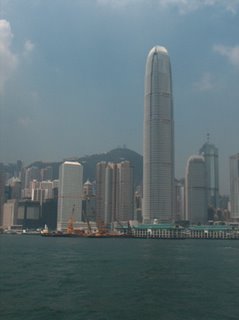
He did offer one interesting insight into how HK has changed in since the 80s. In the photo on the right, the skyscraper on the left is called Jardine House. The last time John was here, it was one of the largest buildings on the island. Now, it’s dwarfed by many buildings like the one on the right. Expansion on Hong Kong Island only goes upward.

He did offer one interesting insight into how HK has changed in since the 80s. In the photo on the right, the skyscraper on the left is called Jardine House. The last time John was here, it was one of the largest buildings on the island. Now, it’s dwarfed by many buildings like the one on the right. Expansion on Hong Kong Island only goes upward.
First impressions of Hong Kong

Hong Kong is the most vertical city I’ve ever seen. I had thought Manhattan was a city of skyscrapers but it’s nothing compared to Hong Kong. And, unlike New York, HK is a very hilly place. It’s really a marvel of civil engineering that they managed to cram so many towering building on a tiny, uneven land mass.
The other you really notice when you’re here is that this is a city on the move. Only we tourists stand about idly and even then, it’s at our own peril. For everyone else, it’s all about selling, buying, and generally getting to the next place as fast as humanly possible. The Boxing Day madness we experience in Toronto would be just a normal working day in Tsim Sha Tsui.

We’ve had two improbable encounters here so far. Last night, John, Leanna, and I were heading out for dinner and we ran into Marjorie on the street. That was the minor miracle. After all, it was dinner time and we were all in a restaurant district reasonable close to our respective apartments. But this morning, a major miracle occurred. Leanna and I were strolling on the elevated walkway in the Central District and who should we run into? There was John quietly reading by a fountain in front of the IFC Mall. You really have to experience HK to appreciate the miniscule odds of that random meeting.
Monday, April 24, 2006
A Letter from Wild Rose Country
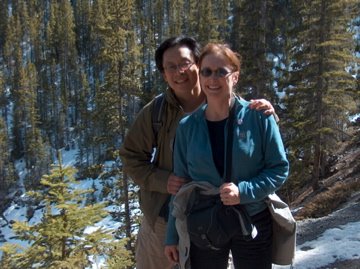
We’ve just completed our third week of rehearsal for Dig. The show is in wonderful shape for the start of cue-to-cue and technical rehearsals next Tuesday at the Vertigo Mystery Theatre.
Since I get a couple of days off, Leanna and I have decided to do some hiking in Banff. It seems fitting that I’m writing this update from the Banff Centre. It was here at the playRites Colony in September 2001 that I first read Glenda Stirling’s wonderful play, Dig. Five years ago, I also met dramaturg extraordinaire Vanessa Porteous who is directing the premiere production. Dig is the story of Hannah (played by the amazing Caroline Cave), an archeologist who with her former professor Parker (played by Charlie Tomlinson) is in China searching for artifacts from the Hsia Dynasty. While there, she runs into her former lover Stuart (that’s me!), an ex-archeologist with a secret double life.

Last night at the Auburn—Calgary’s legendary actor pub—I told Glenda why I love the role of Stuart so much. In my fifteen years as an actor, I have only rarely played a romantic lead in a contemporary drama. Asian males in popular culture are typically asexual creatures. Think about the most popular Asian box-office stars today (I’m talking about Hollywood movies here), Jackie Chan and Jet Li. You’ll see these guys kicking ass and breaking the bones of other men but when have you ever seen them kiss a woman? So it’s a real treat to play a guy who looks, walks and talks like me and—wonder of wonders—actually has a libido too.
Of course, this phenomenon is not restricted to Asian males. Once women hit 45, they cease to be sexual beings in today’s mainstream media. And anyone overweight? Forget it.
These days, we’re hearing so much about increasing diversity in television, film, and theatre. It seems that most producers’ concept of diversity is simply taking lots of people of colour and throwing them in the background as stock characters. Living props, if you will. It’s refreshing to see writers like Glenda create fully-fleshed characters with real desires who also happen to reflect Canada’s diversity.
Subscribe to:
Posts (Atom)

 Posts
Posts

