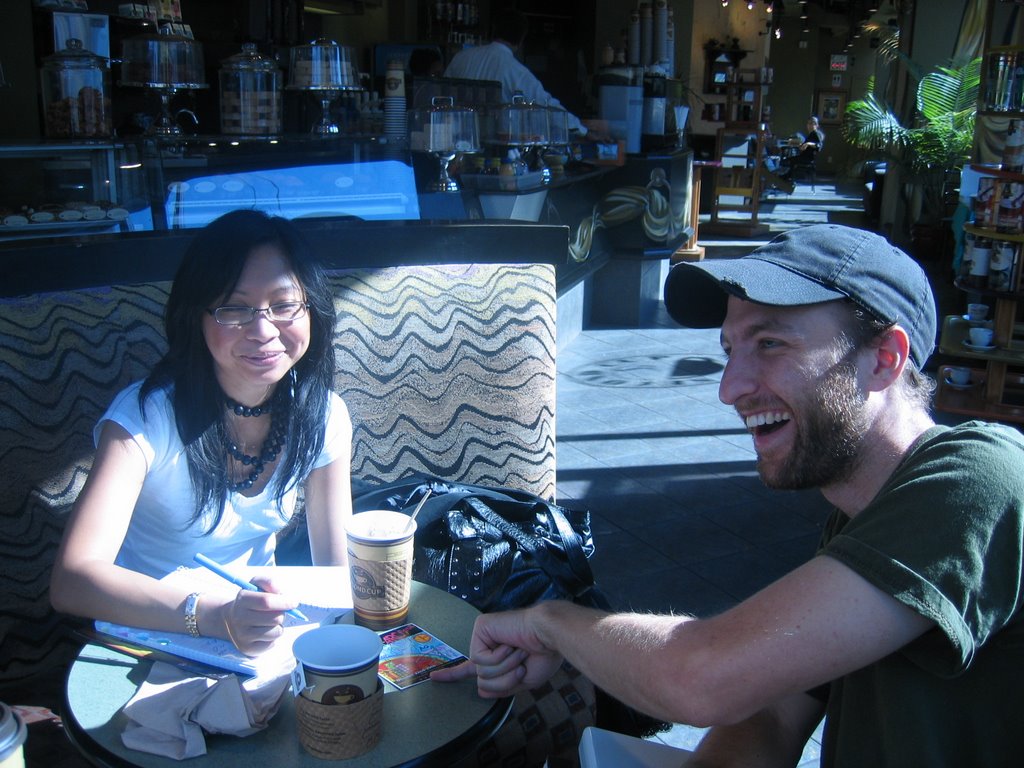
 Here is Marie in a meeting with ARCfest founder and general theatre guy extraordinaire Josh Bloch. They are pointing at the ARCfest postcard which is oh-so-snazzy. Don't you agree?
 Check out their website for all the exciting happenings!
Here is Marie in a meeting with ARCfest founder and general theatre guy extraordinaire Josh Bloch. They are pointing at the ARCfest postcard which is oh-so-snazzy. Don't you agree?Check out their website for all the exciting happenings!
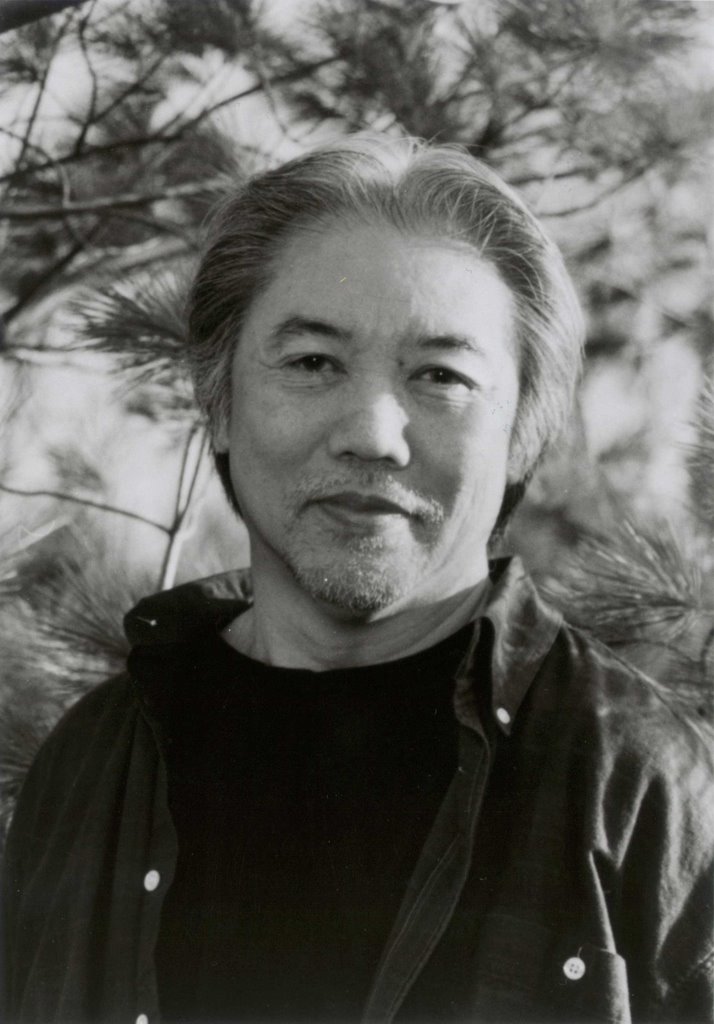
By Ariel Dorfman
The
That is what stays with me - that he was cold under the balmy afternoon sun of Santiago de Chile, trembling as though he would never be warm again, as though the electric current was still coursing through him. Still possessed, somehow still inhabited by his captors, still imprisoned in that cell in the National Stadium, his hands disobeying the orders from his brain to quell the shuddering, his body unable to forget what had been done to it just as, nearly 33 years later, I, too, cannot banish that devastated life from my memory.
It was his image, in fact, that swirled up from the past as I pondered the current political debate in the
That is not, however, the only lesson that today's ruthless world can learn from that distant man condemned to shiver forever.
All those years ago, that torture victim kept moving his lips, trying to articulate an explanation, muttering the same words over and over. "It was a mistake," he repeated, and in the next few days I pieced together his sad and foolish tale. He was an Argentine revolutionary who had fled his homeland and, as soon as he had crossed the mountains into
But how could he convince those men who were beating him, hooking his penis to electric wires and waterboarding him? How could he prove to them that he had been lying, prancing in front of his Chilean comrades, just trying to impress the ladies with his fraudulent insurgent persona?
Of course, he couldn't. He confessed to anything and everything they wanted to drag from his hoarse, howling throat; he invented accomplices and addresses and culprits; and then, when it became apparent that all this was imaginary, he was subjected to further ordeals.
There was no escape.
That is the hideous predicament of the torture victim. It was always the same story, what I discovered in the ensuing years, as I became an unwilling expert on all manner of torments and degradations, my life and my writing overflowing with grief from every continent. Each of those mutilated spines and fractured lives -- Chinese, Guatemalan, Egyptian, Indonesian, Iranian, Uzbek, need I go on? -- all of them, men and women alike, surrendered the same story of essential asymmetry, where one man has all the power in the world and the other has nothing but pain, where one man can decree death at the flick of a wrist and the other can only pray that the wrist will be flicked soon.
It is a story that our species has listened to with mounting revulsion, a horror that has led almost every nation to sign treaties over the past decades declaring these abominations as crimes against humanity, transgressions interdicted all across the earth. That is the wisdom, national and international, that has taken us thousands of years of tribulation and shame to achieve. That is the wisdom we are being asked to throw away when we formulate the question - Does torture work? - when we allow ourselves to ask whether we can afford to outlaw torture if we want to defeat terrorism.
I will leave others to claim that torture, in fact, does not work, that confessions obtained under duress - such as that extracted from the heaving body of that poor Argentine braggart in some Santiago cesspool in 1973 - are useless. Or to contend that the
I find these arguments - and there are many more - to be irrefutable. But I cannot bring myself to use them, for fear of honoring the debate by participating in it.
Can't the United States see that when we allow someone to be tortured by our agents, it is not only the victim and the perpetrator who are corrupted, not only the "intelligence" that is contaminated, but also everyone who looked away and said they did not know, everyone who consented tacitly to that outrage so they could sleep a little safer at night, all the citizens who did not march in the streets by the millions to demand the resignation of whoever suggested, even whispered, that torture is inevitable in our day and age, that we must embrace its darkness?
Are we so morally sick, so deaf and dumb and blind, that we do not understand this? Are we so fearful, so in love with our own security and steeped in our own pain, that we are really willing to let people be tortured in the name of
--------
Ariel Dorfman, a Chilean American writer and professor at
The Sixth Annual Factory Theatre CrossCurrents Festival
A Play Development Festival Celebrating Writers of Colour
April 27 –
CrossCurrents 2007
DEADLINE
Submission Details:
Please include the following:
ø A hard copy of your script, script excerpt or proposal (please do not staple or bind)
ø A cover letter outlining your play’s development history and the artistic goals you aim to meet through the festival
ø Any support material that you feel may benefit or further explain your proposal
ø A self-addressed stamped envelope:
Send to:
2007 CrossCurrents Festival
Attn: Nina Lee Aquino
Factory Theatre
Deadline for submission:
37 years and counting! Established in 1970 by current and founding Artistic Director Ken Gass, Factory Theatre was one of the first companies in the nation to devote itself exclusively to producing Canadian plays. For over three decades, Factory has been at the forefront of the national theatre scene, building a theatre predicated on the Canadian playwright. The astonishing success of the Factory has indelibly changed the face of theatre in this country, as indigenous plays are now produced coast to coast. Currently the country’s largest producer of 100% homegrown creations, Factory is truly the home for Canadian theatre.
For more information on The Factory Theatre or CrossCurrents, please visit www.factorytheatre.ca or e-mail Nina Lee Aquino at nina@factorytheatre.ca
For more info visit:
Selected playwrights will be notified by late Fall 2006
Does What We See On The Screen Affect What We Think Of People?
By JOHN STOSSEL and FRANK MASTROPOLO
Sept. 8, 2006 — - Where do we get our ideas about what groups of people are like? We learn from our parents and friends, of course, but Hollywood has a big influence too.
Most Italian Americans have nothing to do with organized crime. But you wouldn't know that watching movies and TV shows like "The Godfather," "Goodfellas" and "The Sopranos." Those depictions of Italians as gangsters anger Italian activist groups like the Order Sons of Italy in America (OSIA). Dona De Sanctis, OSIA's Deputy Executive Director says, Italians are "among the few ethnic minorities that it's still okay to make fun of, and that's not right."
Beginning in the silent film era, blacks were mainly portrayed by Hollywood as fools and servants. But movie roles have changed for blacks. Since the 1971 movie "Shaft," starring Richard Roundtree as a private eye, blacks have played most every type of humanity.
Hating Yourself
But that's less true for other ethnic groups. On the ABC show "Lost," Daniel Dae Kim kissed a woman. Have you ever seen an Asian actor do that?
Kim told 20/20 he'd played at least fifty roles on television and had never gotten to kiss a woman on-screen until "Lost." Kim says Hollywood stereotypes Asian American actors, relegating them to certain roles. "We've been portrayed as inscrutable villains and asexualized kind of eunuchs," Kim says. "Even Jackie Chan in his movies rarely gets to kiss his female lead."
B.D. Wong of "Law & Order SVU," a winner of Broadway's Tony award, is still waiting for his first on-screen kiss. Wong says he's constantly cast as a doctor.
"I played a doctor on Sesame Street. I played a doctor in the film 'Jurassic Park.' I play a doctor on Law & Order Special Victims Unit."
"It's beyond weird," he told me. "It's wrong … and it makes me feel somehow like I'm not cute, which pisses me off."
Growing up, Wong saw white actors playing Asian parts in what they call "yellowface." In "Breakfast at Tiffany's" the fussy Japanese landlord was Mickey Rooney, which he played with a broadly exaggerated Japanese accent while wearing thick round glasses and fake buck teeth. Some Asians say these images made them hate themselves. "I wanted to be Matthew Broderick," Wong says. "If you could have given me $150,000 and told me it was possible, I would have had that operation."
That's because Broderick was cool … while Asians were not.
Maybe Asian Americans should protest. Arab American groups, sensitive that they're portrayed too often as terrorists, have picketed theaters and persuaded nervous producers to cast them differently. Hollywood used to make lots of movies about Arab terrorists. But since September 11th, Arabs are much less likely to be cast as terrorists. The Tom Clancy best seller "The Sum of All Fears" is about Palestinian terrorists, but when the movie came out, the bad guys had become neo-Nazis.
Speaking Out
Now some Italian groups are complaining. In 2004, Italy planned to award Robert De Niro honorary citizenship, but then De Niro voiced the role of gangster Don Lino in the cartoon "Shark Tale," using language peppered with Italian expressions like "agita." Advocacy groups complained, and Italy cancelled its citizenship ceremony.
That's just silly, says Vincent Pastore, who played a mobster on "The Sopranos." Pastore told 20/20, "Italian people are gangsters. That's like saying all black people are slaves. Italian people are gangsters? It's just bizarre."
Italian American actor/comedian Pat Cooper says, "The activists don't know what they're talking about."
Cooper played one of Robert De Niro's made men in the film "Analyze This" and says groups like Order Sons of Italy are wrong--mob movies don't make people think Italians are gangsters. He says Hollywood favors Italian gangsters "because we're better gangsters ... But that doesn't mean all Italians are gangsters and all Italians are bad, that's ridiculous."
OSIA's De Sanctis disagrees. "I have to say to people like Pat Cooper& I'm sorry, your portrayals are influencing public opinion."
De Sanctis points out "The popularity of a stereotype doesn't justify it ... Cowboy and Indian movies were wildly popular for generations. But that doesn't make the stereotype right."
Pat Cooper responds, "It's an art form, it's a movie! How come nobody comes over to me and says, 'You know, you're making fun of the Italians'? I say, we got a sense of humor, I'm so proud that I'm the first one to let people know we know how to laugh."
For more information, please refer to the sources below, who helped with research for this story:
Jeff Adachi, director of a new documentary "The Slanted Screen: Asian Men in Film & Television"
Show business biographer James Robert Parish, author of "The Encyclopedia of Ethnic Groups in Hollywood"
Copyright © 2006 ABC News Internet Ventures


Nine boats with 898 people made it to the archipelago, rescue workers said.
The surge has prompted the head of the Canaries' government to call the influx Spain's worst humanitarian crisis since the civil war of the 1930s.
Already, more than 20,000 migrants, mostly from sub-Saharan Africa, have arrived on the islands this year - double the previous annual record.
Estimates of the number that have died en route to the islands located off the west coast of Africa range from 590 to 3,000.
"The dam is about to burst," the head of the regional government told members.
"How many more victims, how many pictures of exhausted bodies?" Adan Martin asked.
Opinion polls suggest immigration has become a key concern for Spaniards.
The government has said it will not tolerate the continued arrivals.
Last week Spain called on the European Union for more help to deal with the crisis.
Ships from Portugal and Italy and a Finnish aircraft are also supposed to be helping patrol the West African coast.
But Spain says more boats, planes and personnel are needed.
This article appeared on the BBC News Website, September 6, 2006

And then there is this Asian concept. Asia for Canadians encompasses only East Asia and South East Asia. So when Canadians say Asian they could mean anyone from Burma to China including Vietnam, Korea, Phillipines, and Japan. But the rest of Asia is excluded. Hey, last I heard India, Iraq and Uzbekistan were still in Asia. Am I wrong? Has there been a geographical revolution since I was last in school?
I think we need compulsory standardised testing in geography for all Canadians. Don’t argue. Immigrants are forced to take a stupid culture test on Canada before they are given their Canadian passports. The majority of Canadians would fail that test. Why is the burden of a national Canadian identity being hoisted on us immigrants? And to compound the humiliation we have to swear allegiance to a decrepit, redundant monarchy, a queen in whose name our countries were colonised, pillaged, exploited and generally reduced to rubble and sectarian ashes. And speaking of the queen and colonialism, you know why the Brits can have free admission to their museums and do you know what’s in their museums? COLONIAL PLUNDER!!! LOOT!! STOLEN GOODS!! But I digress. Did you notice I digressed? So anyway, you will not be allowed to renew your driver’s license until you take a world geography test.
by: Isaac Thomas
Forget the apology – ensure that immigrants are employed in the field of their training not working with Group Four Security and Diamond Taxi. Deal with the systemic racism that shuts out pigmented MBAs from upper management. Then apologise.
Some background - in 1914 the Komagata Maru, a ship sailed from Calcutta via HK to Canada. The Canadian government did not want South Asian immigrants bringing their wives into this country because my god they would over breed and over populate the West Coast. It would be fine if they just came in to work and died child-less. Already the white Canadian population was terrified about Chinese immigrants daring to employ vestal white girls, and the dangerous possibilities of miscegenation would only be compounded by libidinous Hindoos (sic) coming into the country.
So they kept the ship in the harbour while disease swept through the passengers. Then they hurriedly changed their laws to say that immigrants had to travel non-stop to this country. And finally sent the ship back to India.
by: Isaac Thomas

 Posts
All Comments


